



Indonesia’s Untapped Potential in the Solar Power Industry
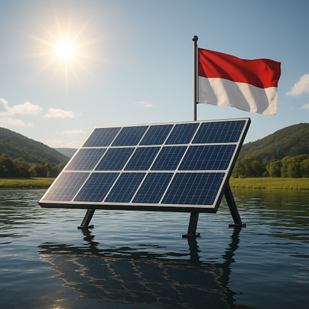
(Source: AI)
Indonesia, endowed with vast natural resources and strategic geographical positioning, holds significant potential to emerge as a major player in the global solar power industry. Despite ambitious targets for renewable energy development, experts argue that the government has not yet demonstrated sufficient commitment to building a comprehensive solar industry. This hesitation risks underutilizing one of the nation’s most promising opportunities in the global transition toward sustainable energy. The government’s Rencana Umum Ketenagalistrikan Nasional (RUKN) 2025–2060 projects that the demand for solar power capacity will reach approximately 108.7 gigawatts by 2060. Furthermore, during the BRICS Summit, President Prabowo Subianto expressed confidence that Indonesia could achieve 100 percent renewable energy within the next decade. However, the Institute for Essential Services Reform (IESR) emphasizes that such ambitions must be accompanied by concrete planning and consistent implementation beyond formal documents such as the Rencana Usaha Penyediaan Tenaga Listrik (RUPTL). Achieving large-scale solar adoption requires not only political ambition but also comprehensive strategies that ensure policy alignment, market readiness, and industry ecosystem development. Global demand for photovoltaic (PV) technology continues to increase, driven by the growing number of countries pursuing net-zero emission targets. At present, China dominates the global solar supply chain, but there is an evident trend of international markets seeking alternative suppliers to reduce dependency and enhance logistical efficiency. Indonesia is uniquely positioned to capitalize on this opportunity. Its location in the heart of Southeast Asia grants natural access to both Asian and Pacific markets, making it a strategic hub for the manufacturing and distribution of solar panels. Seizing this advantage would enable Indonesia not only to meet its domestic renewable energy needs but also to establish itself as an exporter of PV technology, generating new streams of revenue that could eventually replace the declining coal industry. One of Indonesia’s strongest competitive advantages lies in its abundant reserves of critical minerals essential for solar manufacturing. IESR points out that the country has vast deposits of quartz sand, the primary raw material for polysilicon production. An IESR energy analyst, Alvin Putra Sisdwinugraha, notes that more than 17 billion tons of quartz sand are scattered across Sumatra, Kalimantan, Sulawesi, and Nusa Tenggara. Such resources could significantly reduce the cost of producing polysilicon, which currently ranges between US$8 and US$9 per kilogram. However, Indonesia has yet to establish upstream photovoltaic industries such as the production of polysilicon, ingots, wafers, and low-iron tempered glass. The absence of these upstream industries represents a structural gap that prevents Indonesia from fully developing a vertically integrated solar supply chain.
On the downstream side, some progress has been made. The domestic solar industry currently has a production capacity of 9.5 gigawatts for solar cells and 10.6 gigawatts for solar modules. Nonetheless, utilization rates remain low due to limited domestic demand and insufficient market incentives. IESR emphasizes the importance of improving efficiency, enhancing competitiveness, and strengthening the overall industrial ecosystem to ensure that existing production facilities are fully optimized. The domestic industry already has experience producing solar components on a gigawatt scale, which demonstrates strong potential for further expansion. Investor interest in solar manufacturing is also rising, particularly since module production requires relatively lower initial capital. Additionally, the availability of supporting industries such as aluminum and glass, combined with an upward trend in solar module exports, further strengthens the industry’s prospects. To address both the opportunities and challenges, IESR, in collaboration with the Indonesia Institute of Technology (ITI) and the National Research and Innovation Agency (BRIN), has developed a Roadmap for an Integrated Photovoltaic Supply Chain. This roadmap provides strategies for stimulating demand, strengthening production, aligning policy frameworks, advancing key technologies, and creating new employment opportunities. It outlines three main phases of development: the short-term phase from 2025 to 2030 focuses on encouraging demand growth and harmonizing policy frameworks; the medium-term phase from 2031 to 2040 emphasizes advancing technology, automating manufacturing, and developing integrated research centers; and the long-term phase from 2041 to 2060 envisions a fully integrated industry supported by a national consortium to ensure competitiveness and sustainability. Supporting this roadmap requires decisive policy actions. IESR recommends the provision of fiscal and non-fiscal incentives, reforms in procurement and tariff regulations, price preference policies for locally manufactured modules, and harmonization of import duties for supply chain components. At the regional level, greater collaboration within the ASEAN Free Trade Agreement (AFTA) framework could accelerate market integration and establish Indonesia as a solar industry hub. In addition, foreign direct investment should be directed not only toward capacity building but also toward facilitating technology transfer, licensing, and innovation partnerships, ensuring that Indonesia can move beyond dependence on imported technologies. Indonesia’s extraordinary potential to lead the solar industry in Southeast Asia depends on its ability to transform its abundant resources into a competitive and sustainable manufacturing ecosystem. By fostering collaboration between government, industry, and research institutions, supported by clear policy direction and strategic investment, the country could secure both national energy resilience and new avenues of economic growth. Realizing this vision will require decisive action, long-term planning, and coordinated efforts, but the rewards—both in terms of global competitiveness and environmental sustainability—could be transformative for Indonesia’s future.
Reference:
Tempo.co. (2025, August 5). Seberapa besar potensi industri tenaga surya kita? Tempo.co. https://www.tempo.co/ekonomi/seberapa-besar-potensi-industri-tenaga-surya-kita–2055320

Comments :