



Maersk’s Acquisition of the Panama Canal Railway: A Strategic Shift in Global Logistics
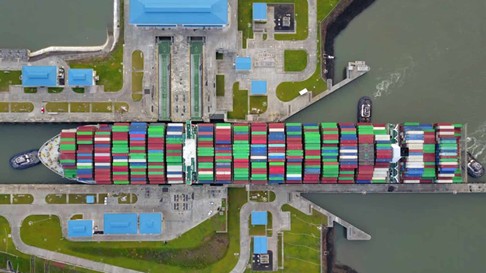
(Source: FreightWaves)
In 2025, A.P. Moller–Maersk, one of the world’s largest shipping and logistics companies, acquired the Panama Canal Railway Company (PCRC), a 76-kilometer railway that runs parallel to the Panama Canal and connects the ports of Colón on the Atlantic side and Balboa on the Pacific side. This railway has long functioned as an interoceanic land bridge, allowing containers to be transported across Panama without passing through the canal. Maersk’s acquisition reflects a broader transformation in global logistics, where companies increasingly seek integrated, multimodal solutions to manage growing uncertainty in global trade routes.
The primary reason behind Maersk’s decision to buy the Panama Canal Railway lies in its long-term strategy to evolve from a traditional ocean shipping company into a fully integrated logistics provider. By owning critical infrastructure beyond vessels and ports, Maersk can control larger portions of the supply chain, offering end-to-end solutions that combine sea, rail, and land transportation. The railway enables Maersk to move containers efficiently between oceans without relying solely on canal transit, which strengthens its intermodal logistics capabilities and enhances service reliability for customers.
Another key driver is the increasing vulnerability of the Panama Canal to environmental disruptions, particularly prolonged droughts that have reduced water levels and forced restrictions on ship transits and draught limits. These constraints have caused congestion, delays, and higher costs for shipping lines. By acquiring the railway, Maersk secures a strategic alternative route that allows cargo to bypass canal bottlenecks when necessary, improving supply chain resilience in the face of climate-related risks. The acquisition also reinforces Maersk’s presence in the Americas trade corridor, a region of growing strategic and economic importance.
The impacts of Maersk’s acquisition are significant for global logistics, Panama’s economy, and regional trade flows. From a logistics perspective, integrating the railway into Maersk’s global network is expected to improve operational efficiency and flexibility. The railway can serve as a complementary route to the canal, especially during periods of congestion or environmental disruption, thereby stabilizing supply chains for time-sensitive cargo. Increased investment and modernization under Maersk’s ownership could also expand the railway’s capacity and technological sophistication, potentially attracting more international shipping and logistics activity to Panama.
For Panama, the acquisition may bring economic benefits in the form of foreign direct investment, infrastructure development, and enhanced connectivity between ports. The continued operation of the railway under a long-term concession framework ensures that it remains part of Panama’s logistics ecosystem while benefiting from the expertise and capital of a global logistics leader. However, the deal has also raised concerns about foreign ownership of strategically important infrastructure. While the railway remains under Panamanian regulation, some stakeholders worry about excessive dependence on multinational corporations and the broader geopolitical implications of control over critical transit routes.
The acquisition offers several advantages. For Maersk and its customers, it provides greater routing flexibility, reduced exposure to canal disruptions, and improved reliability in cargo movement. The integration of rail and maritime transport strengthens supply chain resilience and aligns with the growing demand for seamless, door-to-door logistics services. For Panama, the deal can stimulate infrastructure upgrades and reinforce the country’s role as a global logistics hub connecting major trade lanes.
At the same time, there are notable drawbacks. Concentrating ownership of key logistics infrastructure in the hands of a single global player raises concerns about market power, pricing influence, and equitable access for other shipping lines. There is also the question of whether rail transport can scale sufficiently to serve as a true substitute for canal transits, particularly for bulk cargo or very large vessels. Additionally, expanding rail operations may place pressure on local infrastructure and require careful coordination to avoid congestion or environmental impacts along the corridor.
In conclusion, Maersk’s purchase of the Panama Canal Railway represents a strategic response to growing uncertainty in global trade and climate-related disruptions affecting critical chokepoints. The acquisition aligns with Maersk’s ambition to control more of the logistics value chain while offering customers greater reliability and flexibility. For Panama, the deal presents both opportunities for economic development and challenges related to sovereignty, governance, and long-term infrastructure management. Ultimately, the success of this acquisition will depend on sustained investment, transparent regulation, and cooperation between Maersk, Panamanian authorities, and other stakeholders. As global supply chains continue to face environmental, geopolitical, and operational risks, integrated solutions such as the Panama Canal Railway are likely to play an increasingly important role in shaping the future of international trade.
References:
- Newsroom Panama. (2025). Maersk acquires operations of the Panama–Colón train. https://newsroompanama.com/2025/04/03/maersk-acquires-operations-of-the-panama-colon-train/
- RailTarget. (2025). Maersk acquires Panama rail line amid US–China tensions. https://www.railtarget.cz/freight/maersk-panama-canal-railway-acquisition-10433.html
- Supply Chain Digital. (2025). Why Maersk bet on rail to ease Panama Canal Cargo Strain. https://supplychaindigital.com/logistics/why-maersk-bet-on-rail-to-ease-panama-canal-cargo-strain
- The Business Times. (2025). Maersk to use rail to bypass Panama Canal amid drought. https://www.businesstimes.com.sg/international/maersk-use-rail-bypass-panama-canal-amid-drought

Comments :