



Development of the Semiconductor Industry in Indonesia as a Strategy for National Technological Independence
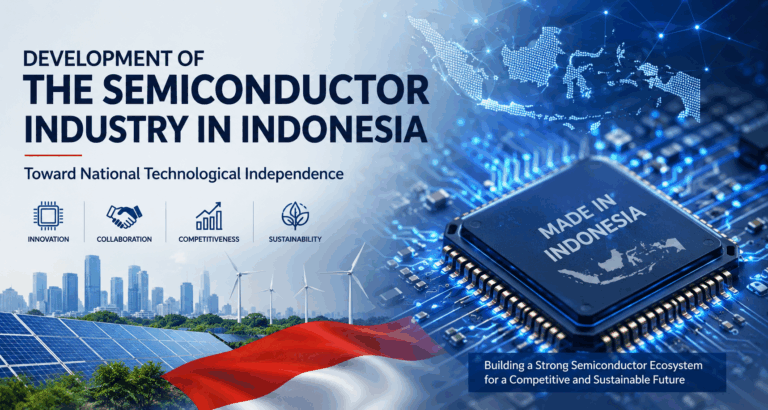
The rapid advancement of digital technology has significantly increased the global demand for semiconductors, which serve as essential components in various modern electronic devices. Semiconductors are widely used in industries such as automotive, telecommunications, artificial intelligence (AI), Internet of Things (IoT), renewable energy, and smart manufacturing systems. As a result, the semiconductor industry has become a strategic sector that determines a country’s competitiveness in the era of digital transformation. Indonesia has begun to demonstrate its commitment to developing a national semiconductor ecosystem through strengthening research, enhancing human resources, and promoting cross-sector collaboration to support technological independence.
Indonesia possesses significant potential for semiconductor industry development due to its availability of raw materials, strategic geographical location, and growing electronics and automotive industries. According to DHL, Indonesia’s semiconductor market is projected to reach approximately USD 5.08 billion in 2025 and is expected to grow further to USD 7.07 billion by 2030. This growth is driven by increasing demand for electronic devices, electric vehicles, and the implementation of digital technologies across industrial sectors. Furthermore, Indonesia has already developed capabilities in assembly, testing, and packaging (ATP), which are crucial components of the global semiconductor supply chain.
The Indonesian government has also initiated a roadmap for the development of the national semiconductor industry by focusing on four primary pillars: materials, chip design, fabrication, and assembly, testing, and packaging. These initiatives aim to increase domestic industrial value-added and reduce dependence on imported technologies. One important initiative is the establishment of collaborative programs involving universities, research institutions, and technology industries to strengthen local chip design capabilities. Such collaboration is expected to accelerate innovation and create a sustainable semiconductor ecosystem in Indonesia.
In addition to semiconductor development, Indonesia is actively promoting the advancement of artificial intelligence as part of its national digital transformation agenda. The integration between AI and semiconductor industries is highly important because semiconductor chips function as the core infrastructure for computational processes and data processing technologies. Therefore, collaboration between educational institutions, research organizations, and industrial sectors is necessary to ensure the sustainable development of both AI and semiconductor technologies. Through this integration, Indonesia can improve its competitiveness in the global technology market while supporting national technological sovereignty.
The development of the semiconductor industry is also closely related to the national energy sector, particularly in supporting sustainable energy transition initiatives. During Energy Week 2025, the National Research and Innovation Agency emphasized the importance of technological innovation and strategic collaboration in strengthening the independence of Indonesia’s energy industry. Semiconductor technologies play a critical role in the development of solar photovoltaic systems (PLTS), electric vehicles, smart grids, and energy-efficient technologies. Consequently, strengthening the semiconductor industry can contribute significantly to accelerating green energy development and sustainable industrial transformation in Indonesia.
Despite its considerable potential, Indonesia still faces several challenges in developing its semiconductor industry. These challenges include the limited availability of skilled human resources specializing in microelectronics, inadequate clean-room facilities and testing laboratories, and relatively low research and development (R&D) capacity. Moreover, Indonesia remains highly dependent on foreign technologies and licenses for chip manufacturing processes. Therefore, long-term investment in education, technical training, research, and industrial infrastructure is essential to enable Indonesia to compete effectively within the global semiconductor supply chain.
From an Industrial Engineering perspective, semiconductor industry development requires an integrated approach involving supply chain management, production planning, quality control, process optimization, and high-technology logistics systems. Industrial Engineering plays an important role in improving manufacturing efficiency, minimizing waste, and developing adaptive production systems aligned with Industry 5.0 principles. In addition, lean manufacturing and sustainable manufacturing approaches can be implemented to support energy efficiency and environmentally sustainable semiconductor production systems.
In conclusion, the development of the semiconductor industry in Indonesia represents a strategic effort toward achieving national technological independence. Collaboration among the government, universities, research institutions, and industrial sectors is essential to building a competitive and sustainable semiconductor ecosystem. If managed effectively, the semiconductor industry can not only enhance Indonesia’s economic growth but also strengthen the country’s position within the global technology value chain in the future.
Reference:
- DHL. (2025). Indonesia semiconductor industry and export potential. DHL Discover. DHL Discover
- Kementerian Pendidikan Tinggi, Sains, dan Teknologi Republik Indonesia. (2025). Memajukan rantai nilai AI dan semikonduktor Indonesia: Kolaborasi untuk kemandirian teknologi. Kemdiktisaintek RI
-

Comments :