


Next-Generation Industrial Engineering: Integrating Circular Economy Principles into Smart Production Systems
(Source: https://www.mdpi.com/)
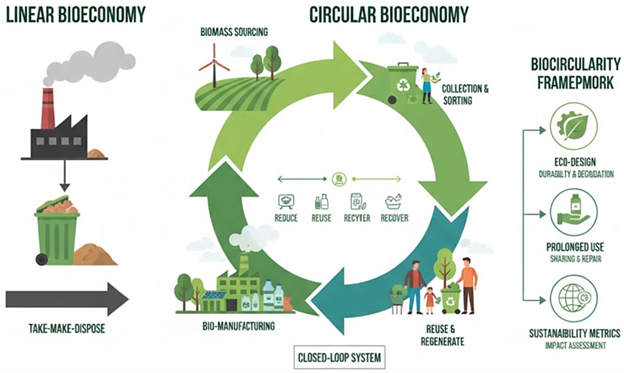
Modern manufacturing industries are entering a phase where sustainability is no longer treated as an optional initiative. Companies are now under pressure to reduce waste, improve resource efficiency, and maintain operational resilience at the same time. This shift has pushed industrial engineering into a new direction where production systems are designed not only for productivity but also for long-term environmental sustainability. Traditional manufacturing models that follow a linear “produce-use-dispose” approach are gradually being replaced by circular production systems that emphasize reuse, recycling, remanufacturing, and intelligent resource management.
The concept of the circular economy has become increasingly important because global industries continue facing challenges related to raw material shortages, volatile supply chains, and rising environmental regulations. Instead of treating waste as a final outcome, companies are beginning to view it as a resource that can be reintroduced into manufacturing processes. This transformation changes how industrial engineers approach facility planning, production scheduling, logistics systems, and operational optimization. Manufacturing systems are no longer designed only to maximize output but also to minimize environmental impact across the entire product lifecycle.
At the same time, smart production technologies are accelerating this industrial transformation. Technologies such as artificial intelligence, Internet of Things (IoT), automation systems, digital twins, and cloud computing are becoming core components of modern manufacturing environments. These technologies allow companies to monitor operations in real time, analyze machine performance instantly, and identify inefficiencies before they become costly operational problems. Smart production systems provide industrial engineers with the data visibility necessary to improve both operational efficiency and sustainability simultaneously.
One of the most influential technologies supporting modern industrial engineering is artificial intelligence. AI-driven manufacturing systems can analyze massive amounts of operational data far more efficiently than traditional analytical methods. Predictive maintenance systems powered by machine learning can detect signs of equipment failure before breakdowns occur, helping companies reduce downtime and extend machine lifecycles. AI can also optimize production scheduling, reduce energy consumption, and improve inventory management by predicting demand patterns more accurately. These capabilities are especially valuable in circular manufacturing systems where resource optimization plays a critical role.
Automation technologies are also becoming increasingly important in sustainable manufacturing operations. Autonomous robots, automated material handling systems, and intelligent production lines help reduce operational errors while improving consistency and efficiency. In circular manufacturing environments, automation supports material sorting, recycling, and remanufacturing processes that would otherwise require extensive manual labor. The combination of AI and automation allows factories to operate with greater precision while minimizing unnecessary resource consumption and production waste.
Digital twin technology represents another major advancement in next-generation industrial engineering. A digital twin is a virtual simulation of a physical manufacturing environment that allows engineers to test production scenarios before implementing them in real operations. Industrial engineers can use digital twins to analyze energy usage, optimize factory layouts, evaluate sustainability strategies, and improve process efficiency without interrupting ongoing production activities. This technology reduces implementation risks while helping organizations make more informed operational decisions.
Supply chain management is also evolving as industries adopt circular economy principles. Traditional supply chains were designed primarily for one-way product movement from manufacturers to consumers. Circular production systems require reverse logistics networks capable of collecting used products, recovering materials, and reintegrating components into production cycles. Industrial engineers are responsible for designing these reverse logistics systems while balancing transportation efficiency, operational cost, and environmental impact. Efficient reverse logistics has become essential for supporting sustainable manufacturing ecosystems.
Despite these technological advancements, industries still face several challenges in implementing circular smart factory systems. One of the biggest obstacles is the high investment cost associated with advanced automation technologies, renewable energy infrastructure, and digital manufacturing platforms. Smaller manufacturers often struggle to adopt these systems because of limited financial resources and uncertain short-term returns. Workforce readiness also remains a significant challenge. Modern industrial operations require employees with skills in data analytics, AI systems, sustainability management, and digital manufacturing technologies. Many organizations are still working to close these technical skill gaps through training and workforce development programs.
Even with these challenges, the future of industrial engineering appears increasingly connected to sustainability and digital innovation. Governments, investors, and consumers continue demanding environmentally responsible manufacturing practices, encouraging companies to redesign operations around energy efficiency and resource optimization. Emerging technologies such as AI-driven analytics, smart energy systems, and autonomous manufacturing platforms are expected to further accelerate the development of intelligent and sustainable factories over the next decade.
Industrial engineering is no longer limited to improving factory efficiency through traditional workflow optimization methods. The discipline is evolving into a strategic field that combines sustainability, automation, operational intelligence, and technological integration. Future industrial engineers will play a critical role in designing manufacturing systems that are not only productive and cost-efficient but also adaptive, resilient, and environmentally sustainable in an increasingly complex global industrial environment.
References:
- World Economic Forum. (2025). Circular Economy and Advanced Manufacturing. https://www.weforum.org/
- McKinsey & Company. (2025). The Future of Sustainable Manufacturing. https://www.mckinsey.com/
- Gartner. (2025). Manufacturing Technology Trends and Smart Factory Innovation. https://www.gartner.com/
- International Energy Agency (IEA). (2025). Industrial Energy Efficiency and Sustainable Manufacturing. https://www.iea.org/
- United Nations Industrial Development Organization (UNIDO). (2025). Industrial Development Report 2025. https://www.unido.org/
- Harvard Business Review. (2025). The Rise of Circular Manufacturing Systems. https://hbr.org/
- Accenture. (2025). Technology Vision for Smart and Sustainable Manufacturing. https://www.accenture.com/

Comments :