



Aquaponic Farming as a Sustainable Solution for Urban Communities
(Source: OSC Medcom.id)
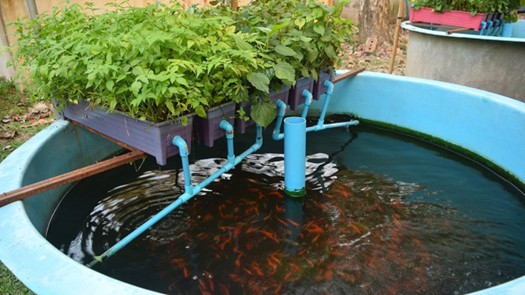
As urban areas become more crowded and green spaces continue to decrease, communities are starting to look for innovative agricultural solutions that can adapt to limited land conditions. One promising solution is aquaponic farming, a system that combines fish farming and plant cultivation in one sustainable ecosystem. Aquaponics is considered suitable for densely populated residential areas because it does not require large land spaces and can be implemented in small yards, rooftops, or community spaces. With proper management, aquaponic systems can support food production while maintaining environmental sustainability.
Aquaponic farming works by utilizing waste produced by fish, such as catfish, to provide nutrients for plants. Fish produce ammonia through their waste, which is then converted by beneficial bacteria into nitrates, a form of nitrogen that plants can absorb as natural fertilizer. This cycle creates a mutually beneficial ecosystem where plants help filter and clean the water before it returns to the fish tank. According to the Food and Agriculture Organization (FAO), aquaponics is recognized as an efficient and environmentally friendly agricultural method because it uses less water and reduces chemical fertilizer dependency.
One of the biggest advantages of aquaponic farming is its suitability for urban communities with limited agricultural land. In densely populated neighborhoods, traditional farming methods are often difficult to implement due to space limitations and environmental concerns. Aquaponics offers a cleaner and more organized farming system that can operate in compact areas without producing excessive waste or unpleasant odors. In addition, the system can help communities produce vegetables and fish locally, reducing dependence on food supplies from outside areas.
Aquaponic farming can also provide economic opportunities for elderly people and retirees. Many senior citizens still want to remain productive after retirement but may face physical limitations that prevent them from doing heavy work. Aquaponic systems are relatively manageable and can become a source of additional income through the sale of vegetables, herbs, and catfish. Community-based aquaponic projects can also encourage social interaction among residents and help elderly individuals stay active and engaged within their neighborhoods.
Beyond economic benefits, aquaponics contributes positively to environmental sustainability. The nitrogen cycle created by fish waste supports natural plant growth without excessive chemical fertilizers that may damage soil and water ecosystems. According to the United States Department of Agriculture (USDA), aquaponic systems can significantly reduce water usage compared to conventional agriculture because water is continuously recycled within the system. This makes aquaponics especially valuable in urban areas facing environmental and resource challenges.
The use of catfish in aquaponic systems is also beneficial because catfish are relatively easy to maintain, adaptable to different environmental conditions, and capable of producing nutrient-rich waste that supports plant growth. As a result, aquaponics not only provides fresh food for communities but also creates a sustainable ecosystem where fish, plants, and microorganisms work together naturally. The integration of agriculture and aquaculture in one system demonstrates how modern farming can become more efficient and environmentally responsible.
References:
- Food and Agriculture Organization (FAO). (2023). Small-scale aquaponic food production. www.fao.org
- Pangestu, A., & Sukada, B. A. (2021). FASILITAS PENYEDIA AQUAPONIK MULTIVARIAN SELAMA PANDEMIK COVID DI JAKARTA TIMUR. Jurnal Sains, Teknologi, Urban, Perancangan, Arsitektur (Stupa), 3(1), 521-534.
- Dinata, I. M. A. (2026). Implementasi Sistem Akuaponik untuk Pemberdayaan Masyarakat di Kelurahan Keramasan, Kecamatan Kertapati, Kota Palembang. Journal of Innovative and Creativity, 6(1), 14287–14294. Retrieved from https://joecy.org/index.php/joecy/article/view/8573

Comments :