



Japan’s First Two-Story 3D-Printed House: Innovation to Address the Construction Crisis
(Source: media.cnn.com)
Japan’s construction industry is currently facing significant challenges due to rising material costs and a declining productive workforce. These conditions have triggered a productivity crisis that threatens the future of Japan’s multibillion-dollar construction sector. Amid these challenges, the emergence of a two-story house built using 3D-printing technology is seen as a potential solution for the future of construction.
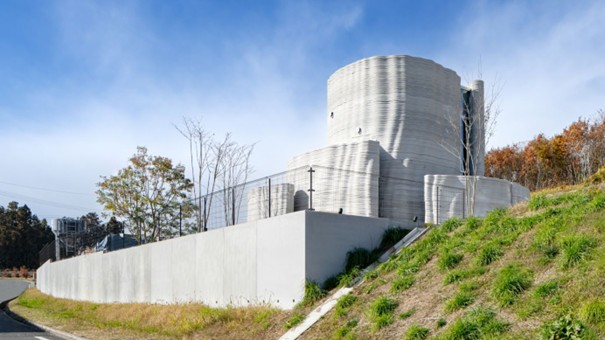
Japanese construction technology startup Kizuki introduced “Stealth House,” Japan’s first two-story home constructed using 3D-printing technology. The project was developed in collaboration with more than 20 companies, including ONOCOM, and was designed to comply with Japan’s strict earthquake-resistant building standards.
According to Kizuki CEO Rika Igarashi, the project became a major milestone because the entire construction process was fully integrated, starting from transferring design data directly to the printer, continuous on-site construction, and finishing works. It marked the first successful implementation of a full-scale two-story residential building using 3D-printing technology in Japan.
Located in Kurihara City, Miyagi Prefecture, the house stands approximately six meters tall with a building area of around 50 square meters. Its design was inspired by natural cave formations, giving the structure a modern and unique appearance. Impressively, the printing process from foundation to rooftop required only around 14 days using a large gantry printer.
Structurally, the exterior walls use a hollow structure combined with reinforced concrete framing to ensure compliance with building safety and earthquake resistance standards. 3D-printing construction technology itself is known for several advantages, including faster construction time, reduced labor requirements, improved workplace safety, and minimized material waste. In addition, the technology enables more flexible and innovative architectural designs compared to conventional methods.
Although 3D-printing construction technology is considered highly promising, its implementation still faces challenges, particularly regarding regulations and building standards that have yet to fully adapt to technological advancements in many countries. Nevertheless, the success of “Stealth House” demonstrates the strong potential of this technology for future real-world applications. The house has even been sold, although the selling price was not disclosed, indicating growing market interest in innovative 3D-printed housing.
This development highlights how digitalization and automation are beginning to bring major transformation to the construction industry. By utilizing technologies such as additive manufacturing and 3D printing, the construction sector has the potential to become more efficient, faster, and more sustainable in the future.
Reference:
- CNN. (2026, May 7). This startup built Japan’s first 3D-printed two-story home. It wants to solve the country’s construction crisis. CNN Business. edition.cnn.com


Comments :