


Digital Twin Technology and Sustainable Industrial Engineering in Modern Manufacturing Systems
(Source: https://www.mdpi.com/)
Modern manufacturing industries are undergoing a major transformation driven by digitalization, sustainability demands, and the increasing complexity of global production systems. Industrial engineering, once heavily centered on workflow optimization and production efficiency, is now expanding into a highly data-driven discipline that integrates advanced technologies with sustainable operational strategies. Among the most influential innovations reshaping manufacturing today is Digital Twin Technology, a system that allows companies to create virtual replicas of physical operations for real-time monitoring, simulation, and optimization. As industries pursue smarter and more sustainable production models, digital twins are becoming a critical component of next-generation industrial engineering.
Digital twin technology refers to a digital representation of a physical object, process, system, or entire manufacturing facility that continuously receives real-time operational data from sensors and connected devices. Unlike traditional simulation models, digital twins evolve dynamically based on live operational conditions. This allows manufacturers to monitor equipment performance, analyze production processes, predict system failures, and test operational changes without disrupting actual factory operations. In modern manufacturing systems, digital twins function as intelligent decision-support tools capable of improving both operational efficiency and sustainability performance simultaneously.
The growing importance of sustainability in manufacturing has accelerated the adoption of digital twin systems across industrial sectors. Companies worldwide face increasing pressure to reduce carbon emissions, optimize energy consumption, minimize waste generation, and improve resource utilization while maintaining high productivity levels. Traditional manufacturing methods often struggle to balance these objectives because operational visibility is limited and decision-making processes rely heavily on delayed reporting systems. Digital twin technology addresses this challenge by providing industrial engineers with real-time operational transparency across production environments.
One of the most significant advantages of digital twins in sustainable manufacturing is their ability to improve energy efficiency. Manufacturing facilities consume enormous amounts of electricity, fuel, and raw materials during production processes. Through continuous monitoring and advanced analytics, digital twins can identify inefficiencies in machine operation, energy distribution, and production flow. Industrial engineers can use this information to optimize machine scheduling, reduce idle energy consumption, and improve overall equipment effectiveness. By simulating operational scenarios virtually, companies can evaluate energy-saving strategies before implementing them in physical production systems, reducing both operational risk and unnecessary resource consumption.
Predictive maintenance is another area where digital twin technology significantly contributes to sustainable industrial engineering. Traditional maintenance systems often rely on fixed maintenance schedules or reactive repairs after equipment failure occurs. These approaches can result in excessive downtime, wasted resources, and shortened equipment lifecycles. Digital twins, however, continuously analyze equipment conditions through real-time sensor data and machine learning algorithms. This allows companies to predict potential failures before breakdowns occur, enabling maintenance activities to be performed only when necessary. Predictive maintenance reduces material waste, extends machinery lifespan, minimizes operational disruptions, and improves overall sustainability performance within manufacturing environments.
Digital twin systems also support waste reduction and circular manufacturing initiatives. Sustainable industrial engineering increasingly focuses on creating closed-loop production systems where materials are reused, recycled, and reintegrated into manufacturing processes. Through detailed process simulations, digital twins allow industrial engineers to analyze material flow across production systems and identify sources of inefficiency or waste generation. Engineers can test alternative production configurations, optimize resource allocation, and improve process efficiency without interrupting ongoing operations. This capability is especially valuable in industries attempting to transition from traditional linear manufacturing toward circular economy production models.
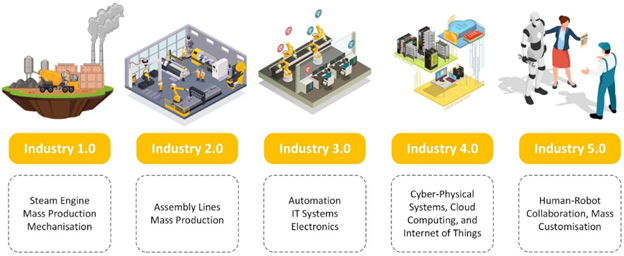
The integration of Internet of Things (IoT) technologies further enhances the effectiveness of digital twins in smart manufacturing systems. IoT sensors installed across factory equipment continuously collect operational data related to temperature, vibration, machine speed, energy usage, and production quality. This real-time data is transmitted directly to digital twin platforms, creating highly accurate virtual models of physical operations. Industrial engineers can monitor factory conditions remotely, analyze production performance instantly, and respond to operational issues more quickly than with conventional monitoring systems. The combination of IoT and digital twin technology creates manufacturing environments that are not only more efficient but also more adaptive and resilient.
Artificial intelligence also plays a central role in the evolution of digital twin systems. AI-driven analytics allow digital twins to process large volumes of operational data and generate predictive insights automatically. Machine learning algorithms can identify hidden patterns within production systems, detect anomalies, and recommend operational improvements based on historical and real-time data. This transforms industrial engineering into a more proactive discipline where decisions are increasingly guided by predictive intelligence rather than reactive problem-solving. AI-enhanced digital twins help organizations optimize production planning, reduce operational costs, and improve sustainability outcomes simultaneously.
Workforce transformation is another important aspect associated with digital twin adoption in modern manufacturing systems. As factories become increasingly digitalized, industrial engineers and manufacturing professionals must develop new competencies related to data analytics, simulation modeling, AI integration, and smart manufacturing systems. Traditional engineering skills alone are no longer sufficient in highly interconnected production environments. Companies are increasingly investing in workforce upskilling programs to prepare employees for digitally integrated industrial operations. Human expertise remains essential because engineers are still responsible for interpreting analytical insights, designing operational strategies, and ensuring that digital technologies align with organizational objectives.
Despite the numerous advantages of digital twin technology, implementation challenges remain significant for many organizations. Developing accurate digital twins requires advanced infrastructure, high-quality operational data, strong cybersecurity systems, and substantial financial investment. Small and medium-sized manufacturers often face difficulties adopting these technologies due to limited technical resources and budget constraints. Data integration across legacy manufacturing systems can also be complex, particularly in older industrial facilities where equipment was not originally designed for digital connectivity. Industrial engineers therefore play a crucial role not only in technology implementation but also in managing organizational transformation and operational integration.
Cybersecurity concerns continue to grow as manufacturing systems become more interconnected through digital platforms and cloud-based technologies. Because digital twins rely heavily on real-time operational data, protecting industrial networks from cyber threats becomes increasingly important. Manufacturers must invest in secure data infrastructure and cybersecurity protocols to ensure the reliability and safety of digital manufacturing systems. Industrial engineering now intersects not only with operations management and sustainability but also with digital risk management and information security.
The future of digital twin technology in industrial engineering appears highly promising as manufacturing systems continue evolving toward greater automation, sustainability, and operational intelligence. Advances in AI, edge computing, 5G connectivity, and cloud infrastructure are expected to make digital twin systems even more powerful and accessible in the coming years. Future smart factories will likely operate through highly integrated digital ecosystems where virtual and physical manufacturing environments continuously interact to optimize production performance in real time.
Digital twin technology represents more than just a technological innovation; it reflects a broader transformation in how industrial systems are designed, managed, and improved. Sustainable industrial engineering increasingly depends on the ability to combine operational efficiency with environmental responsibility through intelligent, data-driven decision-making. As industries continue adapting to global sustainability challenges and technological disruption, digital twins will likely become one of the foundational technologies shaping the future of manufacturing worldwide.
References
- Gartner. (2025). Digital Twin Technology Trends in Smart Manufacturing. https://www.gartner.com/
- McKinsey & Company. (2025). Digital Twins: The Foundation of Smart Manufacturing. https://www.mckinsey.com/
- Siemens. (2025). Digital Twin Applications in Sustainable Manufacturing Systems. https://www.siemens.com/
- International Energy Agency (IEA). (2025). Energy Efficiency and Smart Industrial Systems. https://www.iea.org/
- World Economic Forum. (2025). Industry 4.0 and Sustainable Manufacturing Transformation. https://www.weforum.org/
- Deloitte. (2025). Digital Manufacturing and Operational Sustainability. https://www.deloitte.com/
- Accenture. (2025). The Future of Intelligent Manufacturing Ecosystems. https://www.accenture.com/

Comments :