



Global Crisis Causes Supply Chain Disruptions to Worsen
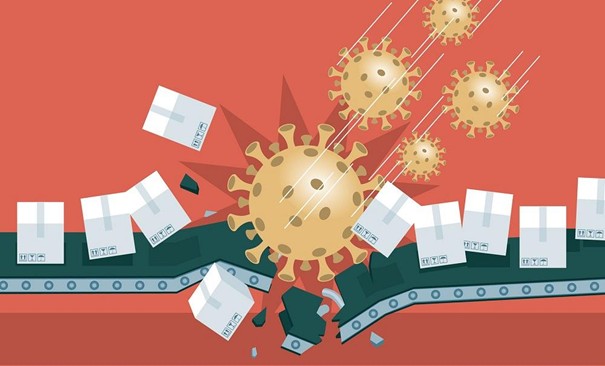
(Source: revolusioner.org)
Global supply chain disruptions that were previously expected to improve have instead become increasingly severe. Several new factors, including the Russia–Ukraine war and the surge of Covid-19 cases in China, have once again placed significant pressure on global production and distribution systems. These conditions have caused difficulties across many industries in obtaining raw materials, production components, and maintaining stable product distribution.
Russia’s invasion of Ukraine has become one of the major causes of new international supply chain bottlenecks. The conflict disrupted exports from Ukraine while economic sanctions imposed on Russia affected many global industries, including the automotive and technology sectors.
At the same time, the increase in Covid-19 cases in China led several regions to impose temporary lockdowns. China, as one of the world’s largest manufacturing centers, plays a critical role in global production and distribution. The shutdown of industrial activities in certain areas further destabilized global supply chains.
Previously, many companies predicted that supply chain conditions would gradually recover by 2023. Several automotive manufacturers, including General Motors, had even expressed optimism about increasing vehicle production by 25% to 30% compared to the previous year. However, those expectations were disrupted by emerging global crises.
General Motors recently announced a temporary two-week production shutdown at its Fort Wayne, Indiana plant due to semiconductor shortages. Although Ukraine and Russia are not major semiconductor producers, Ukraine is one of the world’s largest suppliers of neon gas, which is essential in semiconductor manufacturing processes. Disruptions in neon supply have raised concerns regarding the long-term sustainability of global chip production.
Current supply chain disruptions have also become one of the key drivers behind rising global prices for products such as vehicles, oil, and electronic components. High market demand has not been matched by adequate supply, resulting in significant price increases worldwide.
Industry experts believe the situation remains difficult to predict because it depends heavily on geopolitical developments and the global economic climate. The longer conflicts and crises continue, the greater the impact on global industries.
Furthermore, these conditions demonstrate how dependent the global supply chain system is on international connectivity. When the movement of goods and resources can no longer operate freely as before, industries face significant operational pressure within a short period.
According to industry observers, supply chain disruptions are not entirely new. Typically, disruptions are caused by weather conditions, fires, or natural disasters that only affect specific regions. However, the Covid-19 pandemic and current geopolitical conflicts have had a much broader impact because they simultaneously affect global distribution systems.
As a result, many companies have begun reevaluating their supply chain strategies, including supplier diversification, inventory management improvements, and the adoption of digital technologies to increase flexibility in production and distribution for the future.
Reference:
- Isidore, C. (2022, March 30). Why the global supply chain mess is getting so much worse. CNN Business. edition.cnn.com

Comments :