



Artificial Intelligence and Smart Manufacturing in Industrial Engineering
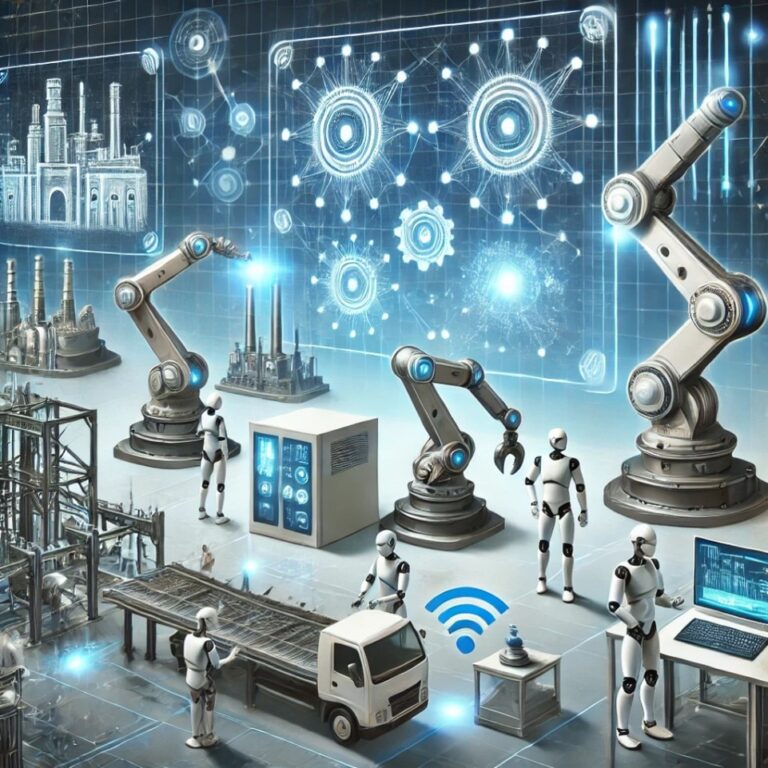
(Source: www.strategymrc.com)
In recent years, manufacturing industries have undergone significant changes due to the rapid development of digital technologies. One of the most influential technologies is Artificial Intelligence (AI), which enables machines and systems to perform tasks that normally require human intelligence. In the field of Industrial Engineering, AI plays an important role in supporting Smart Manufacturing, a concept that integrates intelligent technologies to improve productivity, efficiency, and product quality (Dhamija & Bag, 2023).
Artificial Intelligence in Manufacturing
Artificial Intelligence refers to computer systems that can learn from data, recognize patterns, and make decisions with minimal human intervention. In manufacturing environments, AI helps companies process large amounts of production data and transform it into useful information for decision-making.
AI technologies such as machine learning, deep learning, and computer vision are increasingly used in factories to monitor production processes, detect defects, forecast demand, and optimize resource utilization. These capabilities allow manufacturers to respond more quickly to operational challenges and changing market demands (Xia et al., 2023).
Smart Manufacturing Concept
Smart Manufacturing is a modern manufacturing approach that utilizes advanced technologies such as AI, Internet of Things (IoT), cloud computing, robotics, and digital twins. Through these technologies, machines and production systems can communicate with each other, collect real-time data, and automatically adjust their operations.
Unlike traditional manufacturing systems, smart manufacturing focuses on data-driven decision-making. This approach helps organizations improve production flexibility, reduce waste, and enhance operational performance (Nematollahi et al., 2023).
Applications of AI in Smart Manufacturing
One important application of AI is predictive maintenance. AI systems analyze machine data such as temperature, vibration, and operating conditions to predict potential equipment failures before they occur. As a result, companies can reduce downtime and maintenance costs (Wang et al., 2023).
Another application is automated quality control. AI-powered computer vision systems can inspect products in real time and identify defects more accurately than manual inspection. This helps manufacturers improve product quality and minimize production waste (Aldrini et al., 2024).
AI is also widely used in production planning and scheduling. By analyzing historical and real-time data, AI can forecast demand, optimize production schedules, and allocate resources more efficiently. These improvements contribute to higher productivity and better customer satisfaction.
Benefits for Industrial Engineering
The implementation of AI in smart manufacturing provides several benefits for Industrial Engineering. First, it increases production efficiency through automation and process optimization. Second, it reduces operational costs by minimizing machine downtime and material waste. Third, it improves product quality through intelligent inspection systems. Finally, AI supports faster and more accurate decision-making by providing real-time insights into manufacturing operations (Dhamija & Bag, 2023).
These advantages align with the main objectives of Industrial Engineering, which are to maximize productivity, improve quality, and optimize resource utilization.
Challenges and Future Outlook
Although AI offers numerous benefits, its implementation still faces challenges. Manufacturing companies must invest in data infrastructure, advanced technologies, and workforce training. Additionally, AI systems require high-quality data to produce reliable results.
Looking ahead, the integration of AI with digital twins, robotics, and IoT is expected to further enhance smart manufacturing capabilities. Future factories will become more autonomous, adaptive, and sustainable, enabling organizations to remain competitive in the digital era (Ismail et al., 2025).
References
- Aldrini, J., Chihi, I., & Sidhom, L. (2024). Fault Diagnosis and Self-Healing for Smart Manufacturing: A Review. Journal of Intelligent Manufacturing, 35, 2441–2473.
- Dhamija, P., & Bag, S. (2023). Digital Twin for Smart Manufacturing: A Review. Sustainable Manufacturing and Service Economics, 2, 100017.
- Ismail, L., et al. (2025). A Systematic Review of Digital Twin-Driven Predictive Maintenance in Industrial Engineering. arXiv.
- Nematollahi, M., et al. (2023). Digital Twin Based Smart Manufacturing: From Design to Simulation and Optimization Schema. Procedia Computer Science, 221, 1216–1225.
- Wang, H., et al. (2023). Multi-level Predictive Maintenance of Smart Manufacturing Systems Driven by Digital Twin: A Matheuristics Approach. Journal of Manufacturing Systems, 68, 443–454.
- Xia, Z., et al. (2023). Overview of Predictive Maintenance Based on Digital Twin Technology. Heliyon, 9(4), e14534.

Comments :