



Smart Farming: How AI and Drones Are Transforming Modern Agriculture
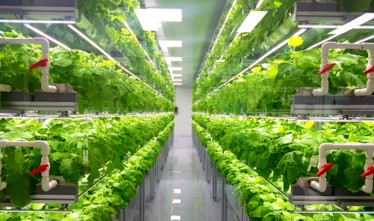
(Source: Syrian Academic Expertise)
Agriculture has long been one of the most important industries in supporting food security and economic development. However, modern agriculture faces various challenges, including climate change, limited agricultural land, labor shortages, and the increasing demand for food. To overcome these challenges, many countries are adopting smart farming technologies such as artificial intelligence (AI), drones, sensors, and the Internet of Things (IoT). These technologies help farmers make better decisions while improving productivity and sustainability.
One of the most widely used technologies in smart farming is artificial intelligence. AI can analyze large amounts of agricultural data, including weather forecasts, soil conditions, and crop health, to help farmers determine the best time for planting, irrigation, fertilization, and harvesting. By using predictive analytics, farmers can reduce unnecessary resource usage while maximizing crop yields. AI also enables early detection of plant diseases and pest infestations, allowing problems to be addressed before they spread across entire fields.
Drones are another innovation that is transforming modern agriculture. Equipped with high-resolution cameras and sensors, drones can quickly monitor large farming areas that would otherwise require significant time and labor to inspect manually. Farmers can use drone imagery to identify unhealthy crops, detect irrigation problems, monitor plant growth, and assess overall field conditions. This technology allows agricultural activities to become more efficient while reducing operational costs and minimizing the excessive use of fertilizers and pesticides.
The implementation of AI and drones also contributes to environmental sustainability. Precision agriculture allows farmers to apply water, fertilizers, and pesticides only where they are needed, reducing waste and minimizing environmental pollution. Efficient resource management not only lowers production costs but also helps preserve soil quality and water resources for future generations. As global concerns about climate change continue to grow, sustainable farming practices are becoming increasingly important for ensuring long-term food production.
Despite its many benefits, smart farming still faces several challenges. Advanced technologies often require significant investment, making them difficult to adopt for small-scale farmers. In addition, limited digital literacy and inadequate internet infrastructure in rural areas can slow the implementation of AI-based agricultural systems. Governments, educational institutions, and technology companies therefore need to work together to provide affordable technologies, training programs, and better digital infrastructure to support farmers.
As technology continues to develop, smart farming is expected to become more accessible and efficient. AI systems will become increasingly accurate in predicting crop performance, while drones and autonomous machines will continue to reduce manual labor and improve farming efficiency. The integration of these technologies can help increase food production while promoting more sustainable agricultural practices. This transformation will be essential as the global population continues to grow and the demand for food rises.
In conclusion, AI and drones are reshaping the agricultural industry by making farming more efficient, productive, and environmentally friendly. Although challenges such as investment costs and technological accessibility remain, smart farming offers a promising solution for the future of agriculture. By embracing innovation while supporting farmers through education and infrastructure development, the agricultural industry can become more resilient and better prepared to meet future food security challenges.
References:
- FAO. 2025. The State of Food and Agriculture 2025 – Addressing land degradation across landholding scales. Rome. https://doi.org/10.4060/cd7067en
- González-García, S., et al. (2025). A review of drones in smart agriculture: Issues, models, trends, and challenges. Sustainability, 18(1), 507. https://doi.org/10.3390/su18010507
- Unde, S. S., Kurkute, V. K., Chavan, S. S., & Mohite, D. D. (2025). The expanding role of multirotor UAVs in precision agriculture with applications, AI integration and future prospects. Discover Mechanical Engineering, 4, 38. https://doi.org/10.1007/s44245-025-00132-4

Comments :