



B50 Officially Takes Effect: Indonesia Advances Its National Energy Transition
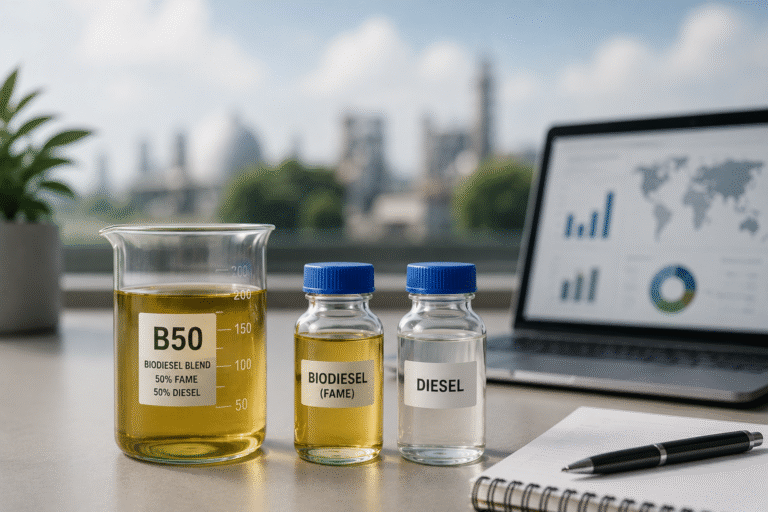
Starting July 1, 2026, Indonesia officially enters a new phase in its national energy transition with the implementation of B50, a biodiesel fuel consisting of 50% palm oil-based biodiesel (Fatty Acid Methyl Ester/FAME) and 50% conventional diesel fuel. This policy continues Indonesia’s mandatory biodiesel program, which has progressively evolved from B20 to B30, B40, and now B50. The initiative forms part of the government’s long-term strategy to strengthen national energy security while reducing dependence on imported fossil fuels.
The implementation of B50 represents more than simply increasing the biodiesel content in diesel fuel. It reflects Indonesia’s commitment to maximizing the utilization of domestic resources, enhancing the value of its palm oil industry, and accelerating the transition toward a more sustainable energy system.
What Is B50 Biodiesel?
B50 biodiesel is a fuel produced by blending 50% biodiesel derived from vegetable oil—primarily palm oil—with 50% petroleum-based diesel fuel. The biodiesel component is manufactured through a transesterification process, which converts vegetable oil into Fatty Acid Methyl Ester (FAME), making it suitable for use in diesel engines.
By increasing the biodiesel content to 50%, Indonesia aims to expand the use of renewable energy across multiple sectors, including transportation, mining, agriculture, power generation, and various industries that continue to rely on diesel-powered machinery.
Why Is B50 an Important Strategy?
The Indonesian government considers the implementation of B50 a strategic step toward strengthening national energy security. Utilizing palm oil as the primary feedstock for biodiesel is expected to reduce the country’s dependence on imported diesel while optimizing the use of abundant domestic resources.
Beyond enhancing energy security, the B50 program is also expected to:
- Increase the added value of Indonesia’s palm oil industry.
- Reduce dependence on fossil-based energy sources.
- Support the development of renewable and alternative energy.
- Strengthen the stability of the national energy supply amid fluctuations in the global energy market.
Through the implementation of B50, Indonesia is not only working toward a more self-reliant energy system but also reinforcing the foundation for sustainable industrial development by promoting the efficient use of domestic resources.
References:
- Environment Indonesia. (2026). What is B50 biodiesel implemented in 2026? https://environment-indonesia.com/apa-itu-biodiesel-b50-yang-diimplementasikan-tahun-2026/
- Ministry of Energy and Mineral Resources of the Republic of Indonesia. (2026). B50 trial in the mining sector shows positive results, strengthening national energy security. https://www.esdm.go.id/id/media-center/arsip-berita/uji-b50-di-sektor-pertambangan-tunjukkan-hasil-positif-perkuat-ketahanan-energi-nasional
- Kompas.com. (2026, June 19). What is B50? The new biodiesel fuel taking effect on July 1, 2026, and the vehicles that can use it. https://money.kompas.com/read/2026/06/19/083321926/apa-itu-b50-biodiesel-baru-yang-mulai-berlaku-1-juli-2026-kendaraan-ini-bisa

Comments :