



Smart Manufacturing in Indonesia: Driving Industrial Transformation
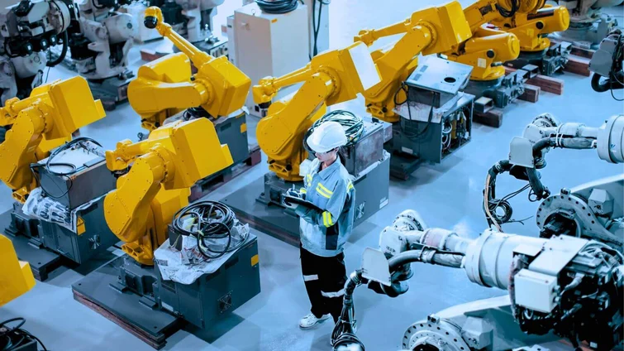
(Source: cyngn.com)
Indonesia is accelerating industrial digitalization through the Making Indonesia 4.0 initiative. Smart manufacturing integrates technologies such as the Internet of Things (IoT), Artificial Intelligence (AI), robotics, cloud computing, and big data analytics to improve production efficiency, product quality, and operational flexibility. Several Indonesian manufacturers have successfully implemented smart manufacturing to strengthen their competitiveness in the global market.
Smart manufacturing enables factories to connect machines, sensors, and information systems to monitor and optimize production processes in real time. Through the Making Indonesia 4.0 roadmap, the Indonesian government encourages industries to adopt digital technologies to increase productivity and support sustainable manufacturing.
Several companies have become examples of successful implementation. PT Kalbe Morinaga Indonesia developed a Smart Factory 4.0 by integrating digital monitoring, predictive maintenance, and automated production systems, resulting in higher efficiency and improved product quality. In the automotive sector, PT Sokonindo Automobile applies robotic automation and flexible manufacturing systems, allowing multiple vehicle models to be produced efficiently on a single production line. Meanwhile, PT Schneider Electric Manufacturing Batam utilizes AI, IoT, and digital energy management to optimize manufacturing operations and has been recognized as a member of the World Economic Forum’s Global Lighthouse Network, demonstrating Indonesia’s progress in Industry 4.0 implementation.
The adoption of smart manufacturing provides significant benefits, including increased productivity, reduced machine downtime through predictive maintenance, improved product quality, lower operational costs, and enhanced sustainability. However, challenges remain, particularly high investment costs, limited digital skills, and cybersecurity concerns. Despite these obstacles, continued collaboration among government, industry, and academia is expected to accelerate Indonesia’s digital manufacturing transformation and strengthen its position as a competitive manufacturing hub in Southeast Asia.
References:
- ANTARA News. (2021). Bidik efisiensi, produsen susu terapkan Smart Factory 4.0. https://www.antaranews.com/berita/2112950/bidik-efisiensi-produsen-susu-terapkan-smart-factory-40
- Ministry of Industry of the Republic of Indonesia. (2018). Making Indonesia 4.0: Indonesia’s strategy to enter the 4th generation industry.
- SAP Southeast Asia. (2023). SAP supports Indonesian manufacturing industry towards Making Indonesia 4.0 through digital transformation. https://news.sap.com/sea/2023/04/sap-supports-indonesian-manufacturing-industry-towards-making-indonesia-4-0-through-digital-transformation/
- com. (2017). Pabrik Sokon Adopsi Sistem Industri 4.0 Pertama di Indonesia. https://www.suara.com/bisnis/2017/11/28/142820/pabrik-sokon-adopsi-sistem-industri-40-pertama-di-indonesia

Comments :