

BINUS Industrial Engineering Hosts Pre-FYP Laboratory Exploration Day Two
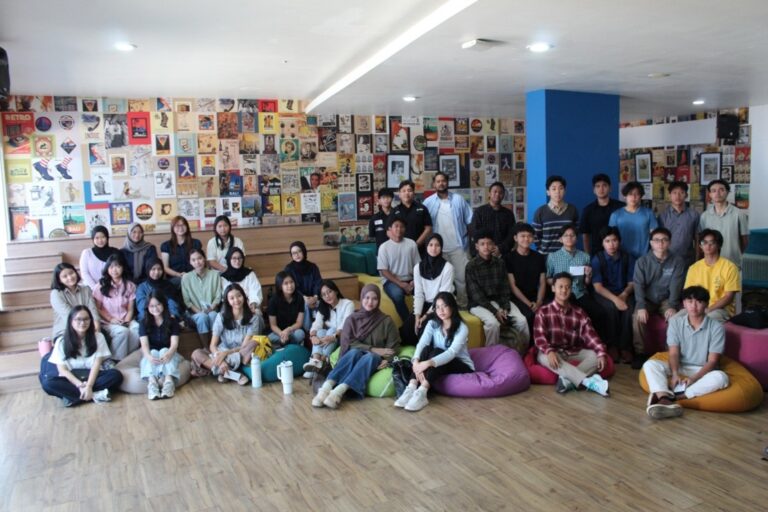
As part of the Pre-FYP event held on June 10 2026, BINUS University’s Industrial Engineering Department invited students to experience the diverse fields of Industrial Engineering through a series of interactive laboratory activities. The event began at the Creative Space, where participants gathered for an opening session and received an overview of the activities prepared by the department. The session also introduced students to the wide range of opportunities and learning experiences available within the Industrial Engineering program before they embarked on a laboratory exploration across multiple facilities.
The first stop was the Manufacturing Laboratory located in KDA. Participants engaged in a cube-making activity that introduced them to manufacturing processes, teamwork, and production efficiency. Working within a simulated production environment, students experienced the importance of coordination, process flow, and time management in achieving production targets. Through this hands-on experience, they gained valuable insights into how products are assembled, managed, and optimized within a manufacturing system.
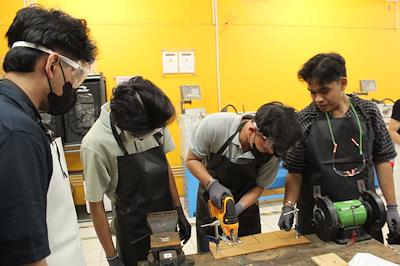
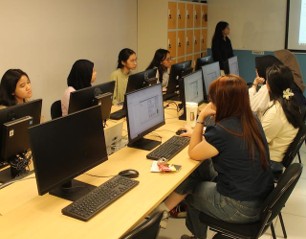
The second laboratory visit took place in HD02, where students explored the Technical Drawing Laboratory. During this session, participants learned the fundamentals of engineering drawing by creating a gear design. They were introduced to the role of technical drawings as a universal language in engineering, allowing ideas and specifications to be communicated accurately. The activity highlighted the importance of precision, visualization, and technical communication in engineering design while demonstrating how design concepts are translated into practical products.
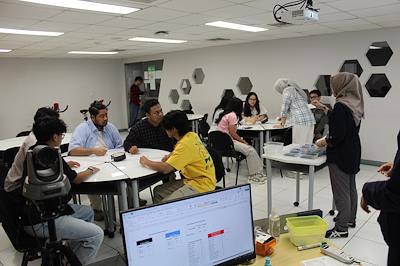
The journey continued to the Supply Chain Laboratory in HD06. Here, students participated in a simulation that challenged them to forecast product demand based on available information and market conditions. After determining the expected demand, they assembled pen components according to their forecasts and conducted quality inspections to identify potential defects. The exercise illustrated the challenges of balancing supply and demand while maintaining product quality and operational efficiency. Through this activity, participants gained a deeper understanding of demand planning, production decision-making, inventory considerations, and quality control processes within a supply chain system.
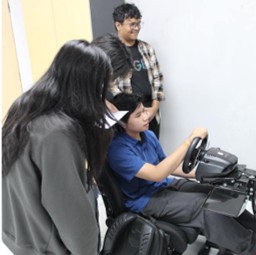
The final destination was HD08, featuring the Driving Simulator and Smart Mini Factory. The Driving Simulator was designed to test participants’ ability to maintain focus under pressure by requiring them to drive while simultaneously answering questions. This activity simulated real-world situations that demand multitasking, concentration, and quick decision-making, emphasizing the importance of human factors in transportation and operational systems.
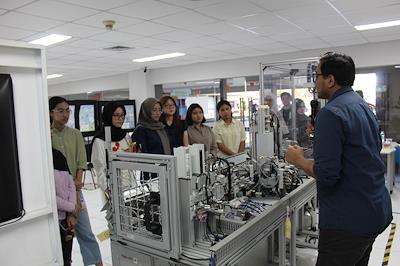
In the Smart Mini Factory area, students explored how automation, digital technologies, sensors, and Industry 4.0 concepts can be integrated into modern manufacturing systems. Through interactive demonstrations, participants gained a better understanding of how smart technologies are transforming industrial operations and enabling more efficient production processes. The session provided a glimpse into the future of manufacturing, where interconnected systems and data-driven decision-making play a crucial role in improving productivity, quality, and operational performance.
To encourage active participation throughout the event, students collected points from every laboratory activity they completed. The point-based system created an engaging and competitive atmosphere while motivating participants to actively take part in each challenge. At the conclusion of the event, participants were able to exchange their accumulated points for a variety of rewards, including lanyards, tumblers, and snacks, making the experience both educational and enjoyable.
Through this Pre-FYP event, BINUS Industrial Engineering successfully provided participants with an engaging introduction to the discipline’s key areas, ranging from manufacturing and technical design to supply chain management and smart industrial systems. Beyond showcasing laboratory facilities, the event allowed students to directly experience how Industrial Engineering concepts are applied to solve practical problems and improve organizational performance. By combining hands-on learning, interactive simulations, and real-world applications, the event demonstrated how Industrial Engineering integrates analytical thinking, problem-solving, technology, and innovation to address the challenges of modern industries.

Comments :