



Enhancing Technical Drawing in Industrial Engineering through Artificial Intelligence Integration
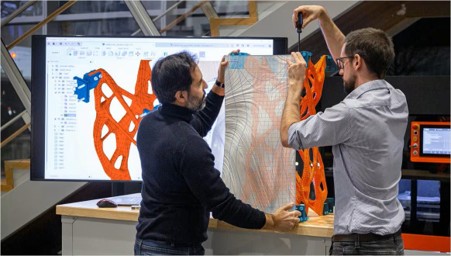
(Source: autodesk.com)
In the era of Industry 4.0, the integration of Artificial Intelligence (AI) into engineering practice has significantly transformed how technical tasks are carried out, including technical drawing. Within Industrial Engineering, technical drawing serves as a fundamental tool for visualizing, designing, and communicating engineering concepts. As digital transformation continues to progress, the incorporation of AI into Computer-Aided Design (CAD) tools such as AutoCAD and Autodesk Inventor has enhanced both the efficiency and accuracy of engineering design processes.
Technical drawing in Industrial Engineering is not limited to producing 2D sketches or 3D models; it also involves problem-solving, system visualization, and product development. Traditionally, students learn technical drawing through geometric construction, dimensioning, and projection methods. As AI technologies advance, however, these processes are becoming increasingly automated and intelligent. Recent engineering-applications research shows that AI methods including machine learning and data-driven optimization are playing an expanding role in supporting mechanical design and design optimization more broadly, moving beyond rule-based drafting toward more adaptive, learning-based approaches.
AutoCAD, as one of the most widely used CAD platforms, has begun incorporating AI-based features that support automated drafting and smart editing. AI can recognize patterns in drawings, suggest object placement, and streamline workflows, allowing students and engineers to focus more on design thinking rather than repetitive tasks. This direction is echoed in emerging work on generative AI for CAD automation, where large language models are being used to translate textual or parametric design descriptions directly into 3D models, pointing toward a future in which drafting itself becomes a more conversational, AI-assisted process.
Autodesk Inventor, meanwhile, offers advanced 3D modeling capabilities in which AI can be applied to simulation, stress analysis, and predictive design. These features let users evaluate product performance before actual production, reducing both development time and cost. In parallel, AI-based systems combined with computer vision have also been developed to automatically evaluate students’ computer-aided drawing assignments, giving learners faster, more consistent, and more objective feedback while supporting self-directed learning outside the classroom.
The implementation of AI in technical drawing also aligns with the learning objectives of Industrial Engineering education at institutions such as BINUS University. Through laboratory-based learning, students are introduced to modern tools and technologies that mirror real industrial practice. This direction reflects the broader Education 4.0 paradigm, which calls for integrating advanced technologies and adaptive learning methods so that engineering education can keep pace with the demands of Industry 4.0, including graduates’ need for AI literacy and AI-supported decision-making skills.
By combining CAD software with AI-driven features, students can develop not only technical skills but also analytical and critical-thinking abilities, preparing graduates to adapt to a rapidly changing technological landscape. Furthermore, the integration of AI in technical drawing contributes to improved collaboration and decision-making: AI-powered systems can analyze large datasets, generate design alternatives, and help engineers select optimal solutions. In an industrial context, this capability is essential for boosting productivity, minimizing errors, and safeguarding product quality, enabling engineers to deliver more innovative and efficient solutions to complex problems.
References:
- Ciolacu, M. I., Mihailescu, B., Rachbauer, T., Hansen, C., Amza, C. G., & Svasta, P. (2023). Fostering Engineering Education 4.0 Paradigm Facing the Pandemic and VUCA World. Procedia Computer Science, 217, 177–186.
- Jenis, J., Ondriga, J., Hrcek, S., Brumercik, F., Cuchor, M., & Sadovsky, E. (2023). Engineering Applications of Artificial Intelligence in Mechanical Design and Optimization. Machines, 11(6), 577.
- Kumar, V., & Vardhan, H. (2025). Generative AI for CAD Automation: Leveraging Large Language Models for 3D Modelling. arXiv preprint.
- Wang Jianwu, L., Lim, S. Y., Lin, K. O., Tan, C. K., Tan, R. Y. S., Sani, S. B., & Agnes, T. H. J. (2024). Artificial Intelligence-Enabled Evaluating for Computer-Aided Drawings (AMCAD). International Journal of Mechanical Engineering Education, 52(1), 3–31.

Comments :