



Artificial Intelligence in Supply Chain Management: Transforming Modern Industries
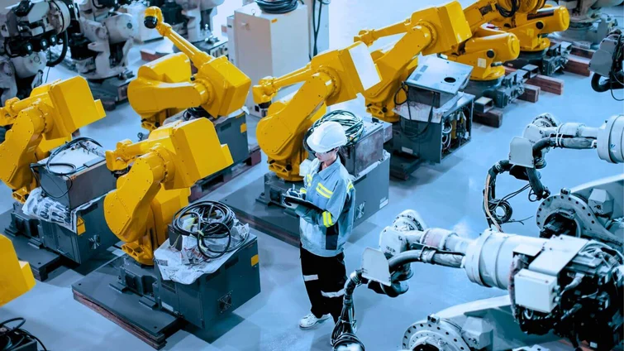
(Source: cyngn.com)
Artificial Intelligence (AI) is transforming supply chain management by improving demand forecasting, inventory optimization, logistics planning, and decision-making. By integrating machine learning, predictive analytics, and automation, companies can enhance operational efficiency, reduce costs, and build more resilient supply chains. As global supply chains become increasingly complex, AI has become a key technology for achieving greater visibility, agility, and sustainability.
Supply chain management involves coordinating the flow of materials, information, and products from suppliers to customers. Traditional supply chains often face challenges such as demand uncertainty, inventory shortages, transportation delays, and operational inefficiencies. Artificial Intelligence (AI) addresses these issues by analyzing large volumes of real-time data to support faster and more accurate decision-making. AI technologies, including machine learning, predictive analytics, and intelligent automation, enable companies to forecast demand, optimize inventory levels, improve warehouse operations, and identify potential supply chain risks before they occur.
Many companies have adopted AI to improve supply chain performance. AI-powered demand forecasting helps manufacturers predict customer demand more accurately, reducing stockouts and excess inventory. In logistics, AI optimizes delivery routes, minimizes transportation costs, and improves delivery times. AI also supports predictive maintenance by monitoring equipment conditions and preventing unexpected machine failures, increasing operational reliability. Furthermore, AI enhances supply chain visibility by providing real-time monitoring across suppliers, warehouses, and distribution networks.
The adoption of AI offers several benefits, including higher forecasting accuracy, lower operational costs, improved customer satisfaction, and greater supply chain resilience. However, organizations still face challenges such as high implementation costs, data quality issues, cybersecurity risks, and the need for skilled professionals capable of managing AI-based systems. Despite these challenges, AI is expected to become a core technology in future supply chains, enabling industries to build smarter, more agile, and sustainable operations.
Reference:
- Cannas, V. G., Ciano, M. P., Saltalamacchia, M., & Secchi, R. (2024). Artificial intelligence in supply chain and operations management: A multiple case study research. International Journal of Production Research, 62(9). https://doi.org/10.1080/00207543.2023.2232050
- Roesnadi, R. A., Nugroho, B. A., & Jones, J. (2025). Artificial Intelligence-Based Demand Forecasting for Industrial Supply Chains. RESWARA: Jurnal Riset Ilmu Teknik. https://doi.org/10.70716/reswara.v3i1.403
- Wigayha, C. K., & Winata, V. (2025). Systematic Review of Artificial Intelligence Applications and Their Impact on Supply Chain Decision-Making and Operational Agility. LOGIS (Logistics, Operations and Global Integration Studies).
- Zijm, H., Klumpp, M., Heragu, S., & Regattieri, A. (2024). Artificial intelligence in supply chain management: A systematic literature review of empirical studies and research directions. Computers in Industry, 162, 104132. https://doi.org/10.1016/j.compind.2024.104132

Comments :