



Improving Production Through Better Facility Layout
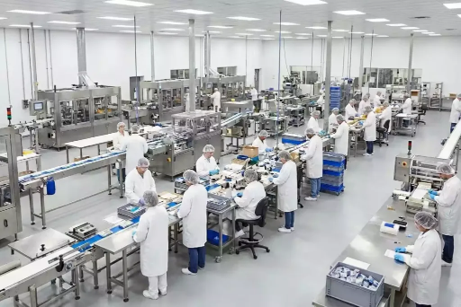
(Source: keyinteriors.us)
Facility layout plays an important role in manufacturing because the arrangement of machines, workstations, storage areas, and material handling systems can affect the efficiency of production activities. An inappropriate layout may result in unnecessary material movement, inefficient use of space, and higher handling requirements. Therefore, facility layout planning is an important part of improving manufacturing operations (Bouramtane et al., 2024).
According to Bouramtane et al. (2024), facility layout problems involve determining the appropriate arrangement of machines, workstations, and material handling systems within a manufacturing facility. The authors also explain that facility layout is closely related to the efficiency and effectiveness of production processes. This indicates that layout improvement should consider not only the physical arrangement of facilities but also the flow of materials and production activities.
The Impact of Facility Layout on Production
One of the main objectives of facility layout improvement is to reduce unnecessary material movement. A layout that follows the sequence of production processes can create a more direct material flow and reduce backtracking between workstations. In a 2024 study at PT Lambang Jaya, Wahyudi et al. found that facility layout planning was important for minimizing material handling activities in a manufacturing environment. The study applied Systematic Layout Planning (SLP) to evaluate the relationship between production facilities and material flow (Wahyudi et al., 2024).
Similar findings were reported by Salins et al. (2024), who investigated an improved layout for a steel processing facility. Their study combined Systematic Layout Planning with lean manufacturing principles to improve material handling and space utilization. The results demonstrate that integrating layout planning with lean principles can provide a more efficient arrangement of production facilities (Salins et al., 2024).
A layout problem can also occur when production stations are not arranged according to the actual material flow. Rahayu Ningrat et al. (2024) identified cross-flow problems in a shoe manufacturing facility, where materials had to move back and forth between several processes. Such movement increased transportation distance and material handling costs. Their study proposed an SLP-based layout redesign to improve the material flow between production areas (Rahayu Ningrat et al., 2024).
Improving Facility Layout Using SLP
Systematic Layout Planning (SLP) is one of the commonly used approaches for improving facility layouts. The method considers the relationships between activities, the required space, and the flow of materials when developing alternative layouts. This makes SLP useful for manufacturing companies that want to improve production flow without completely changing their production system.
For example, Salins et al. (2024) applied SLP together with lean manufacturing techniques in a steel processing facility. Their research emphasized that an improved layout can enhance material handling and the utilization of available space (Salins et al., 2024).
In another manufacturing case, Suryatman et al. (2024) examined the machine layout at PT Prisma Rekayasa Unggul. The existing machine arrangement did not adequately follow the material handling flow. This condition showed the importance of arranging production machines based on the actual movement of materials through the manufacturing process (Suryatman et al., 2024).
The Role of Simulation and Optimization
Traditional layout planning can be further supported by simulation and optimization technologies. Yang and Lu (2023) compared facility layout alternatives for modular construction manufacturing using simulation and optimization. Their study showed that simulation can be used to evaluate different layout configurations before implementing them in the actual production environment (Yang & Lu, 2023).
More recently, Klar et al. (2024) developed a simulation-based deep reinforcement learning approach for multi-objective factory layout planning. Their approach incorporated material-flow simulation into the optimization process, allowing different layout alternatives to be evaluated based on production-related objectives (Klar et al., 2024).
Kim et al. (2024) also highlighted the importance of considering both facility layout and logistics flow when improving manufacturing systems. Their research showed that poor layout designs can reduce production efficiency and increase operational costs, while simulation-based approaches can support the development of more efficient factory layouts (Kim et al., 2024).
Benefits of a Better Facility Layout
Based on recent studies, improving facility layout can provide several benefits, including shorter material handling distances, better utilization of production space, smoother material flow, and improved production efficiency. These benefits are particularly important in manufacturing environments where materials frequently move between multiple workstations (Salins et al., 2024; Wahyudi et al., 2024).
However, facility layout should not be considered a one-time decision. Bouramtane et al. (2024) distinguish between static and dynamic facility layout problems and highlight the importance of developing layout solutions that can respond to changing manufacturing conditions. This is particularly relevant for modern manufacturing systems where product types, production volumes, and process requirements may change over time (Bouramtane et al., 2024).
References:
- Bouramtane, K., Kharraja, S., Riffi, J., El Beqqali, O., & Chraibi, A. (2024). A comprehensive review of static and dynamic facility layout problems. Annual Reviews in Control, 58, 100970. https://doi.org/10.1016/j.arcontrol.2024.100970
- Klar, M., Schworm, P., Wu, X., Simon, P., Glatt, M., Ravani, B., & Aurich, J. C. (2024). Transferable multi-objective factory layout planning using simulation-based deep reinforcement learning. Journal of Manufacturing Systems, 74, 487–511. https://doi.org/10.1016/j.jmsy.2024.04.007
- Kim, et al. (2024). Optimization of the Factory Layout and Production Flow Using Production-Simulation-Based Reinforcement Learning. Machines, 12(6), 390. https://doi.org/10.3390/machines12060390
- Rahayu Ningrat, S. K., Sibarani, A. A., Syahrullah, Y., Setyaningrum, D. T., Prasetyo, M. A., & Ambarwati, S. (2024). Usulan tata letak fasilitas dengan menggunakan metode Systematic Layout Planning (SLP) pada departemen compound industri manufaktur sepatu. Jurnal PASTI, 18(3). https://doi.org/10.22441/pasti.2024.v18i3.006
- Salins, S. S., Zaidi, S. A. R., Deepak, D., et al. (2024). Design of an improved layout for a steel processing facility using SLP and lean manufacturing techniques. International Journal on Interactive Design and Manufacturing, 18, 3827–3848. https://doi.org/10.1007/s12008-024-01828-9
- Wahyudi, R., Garamba, R. R. N., & Nugraha, A. T. (2024). Evaluasi tata letak fasilitas menggunakan metode Systematic Layout Planning di PT Lambang Jaya. Journal of Industrial and Manufacture Engineering, 8(1). https://doi.org/10.31289/jime.v8i1.10618
- Yang, Z., & Lu, W. (2023). Facility layout design for modular construction manufacturing: A comparison based on simulation and optimization. Automation in Construction, 147, 104713. https://doi.org/10.1016/j.autcon.2022.104713

Comments :