


From Competitor to Judge: A BINUS Industrial Engineering Student’s Journey at LKS DKI Jakarta 2026
Bangkit Pramesta Yulianto Serves as One of Three Judges for the Mechanical Engineering CAD Category
Introduction to the Event
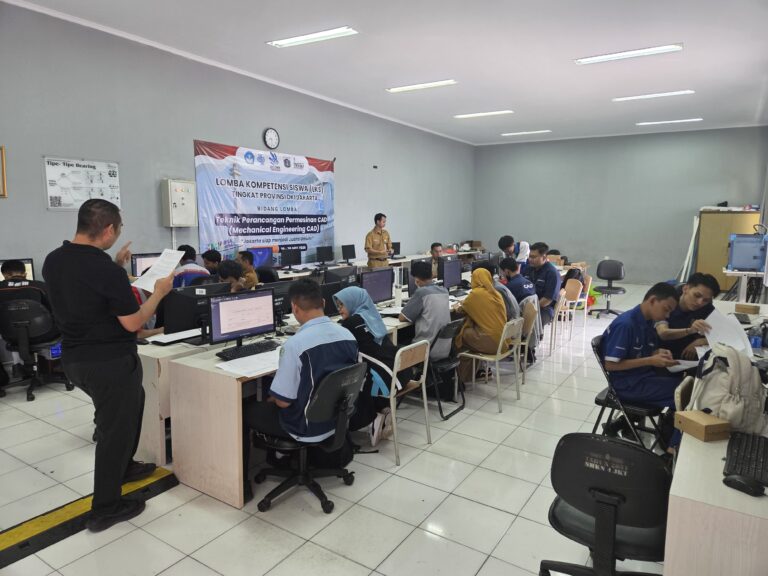
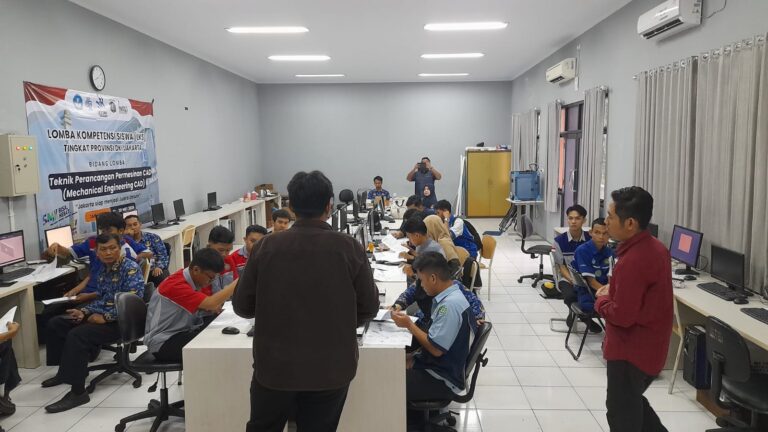
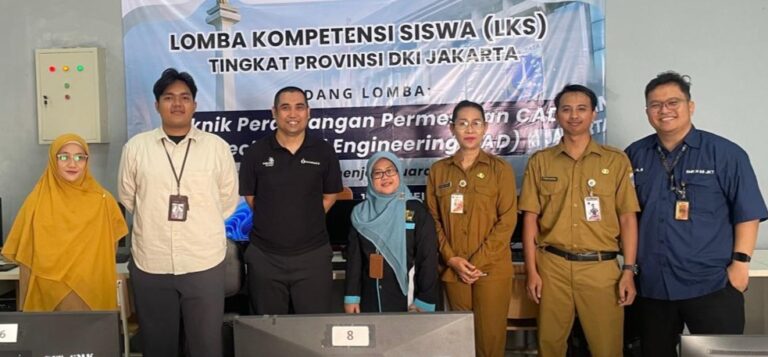
Bangkit Pramesta Yulianto (2702393692), a sixth-semester student of BINUS University majoring in Industrial Engineering, served as one of the judges at Lomba Kompetensi Siswa (LKS) DKI Jakarta 2026, a provincial-level skills competition for vocational high school students organized by Pusat Prestasi Nasional (Puspresnas), Kementerian Pendidikan Dasar dan Menengah. Over two days, May 19–20, 2026, eight city-level representatives from across DKI Jakarta competed in the Mechanical Engineering CAD category. Bangkit served on the judging panel alongside Gundhi Asmoro, S.ST., M.T., Director of PT. Inovasi CAD Indonesia, and Ir. Rachmansyah, S.T., M.T., Lecturer at Universitas Kristen Krida Wacana, where the three judges were responsible for developing and evaluating the competition modules.
Stepping Into the Role of a Judge
Bangkit’s involvement as one of the judges at LKS DKI Jakarta 2026 was closely connected to the professional relationship he had built with the other two judges over the years. Long before joining the judging panel, he had learned from and been evaluated by them through his own journey in Mechanical Engineering CAD competitions. Together with his active track record across CAD, engineering innovation, and business case competitions, this relationship led to his invitation to serve alongside them as a fellow judge at LKS DKI Jakarta 2026. For Bangkit, the opportunity marked an important milestone: returning to a familiar competition environment, but now with the responsibility to help design, assess, and uphold the quality of the competition for the next generation of participants.
Behind the Challenge: Developing Module 3
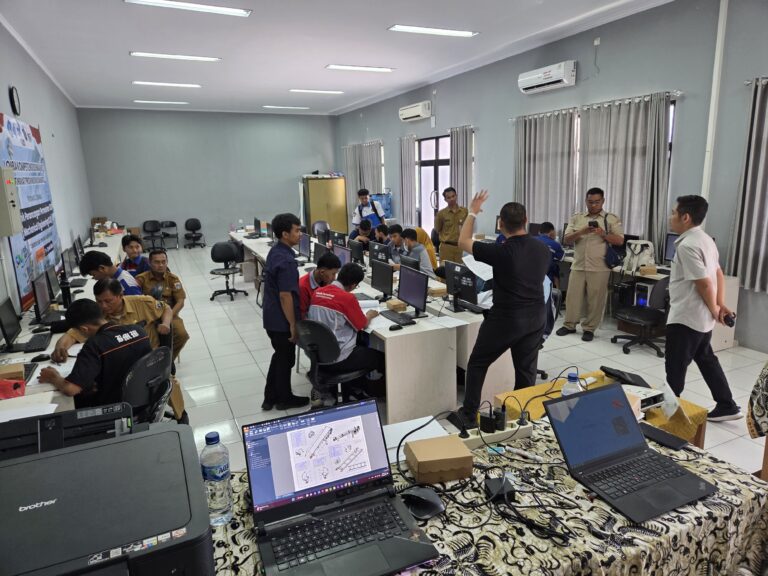
Each of the three judges built one full competition module. Bangkit owned Module 3 – Mechanical Fabrication & Design Challenge (MD) from start to finish: the given drawing, the instruction paper, and the drawing solution used as the answer key. He and his fellow judges then cross-evaluated all three modules together to keep the standards consistent across the competition.
The module centered on IBC2026.2, an Adjustable Inclined Belt Conveyor designed in Autodesk Inventor. Participants had three hours to work with Frame Generator, sub-assemblies, sheet metal design, technical drawing, design modification, and mechanism animation. Building an original problem, one that could not be traced to any existing competition material online, took the most work. The core design challenge required participants to determine undefined dimensions and modify components to meet three separate operating conditions. Bangkit kept returning to the participant’s point of view: the problem had to push them hard, but it still had to be solvable in the time given.
Reflections on the Experience
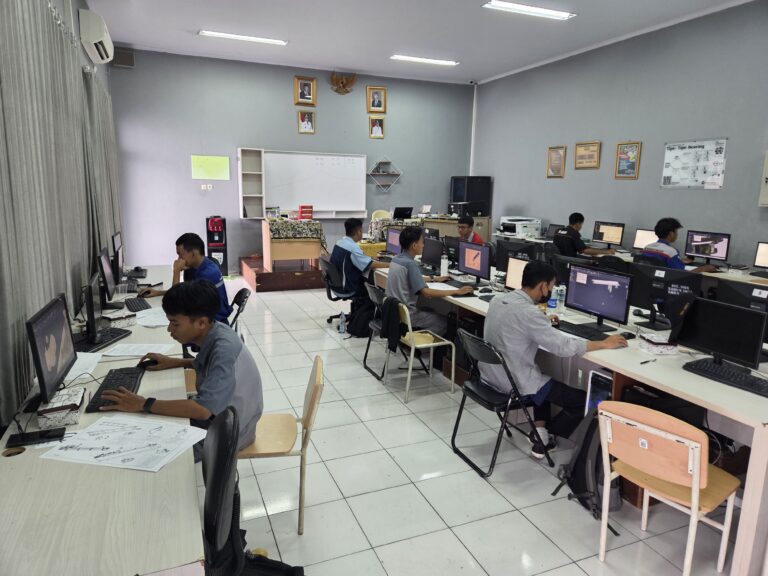
Watching this year’s participants work through a module felt like a flashback for Bangkit, who once competed on the same stage. Ir. Rachmansyah and Gundhi Asmoro, once his mentors and now his fellow judges, told him the module he built matched national-level competition standards.
He also valued the chance to talk with participants directly, sharing his own competition experience with students who reminded him of himself a few years back. Judging opened up a side of the competition he never saw as a participant: the coordination it takes to keep things running, from checking that instructions read clearly to trial-running the problem set and staying ready to fix any gap in dimensions or information the moment it surfaces.
“This opportunity didn’t come by chance. It came from trust and reputation built over time. Wherever I am, I try to hold on to one principle: contribute as much as I can, and do it with integrity,” Bangkit said.
Message for Fellow Students
Bangkit encourages fellow BINUS Industrial Engineering students to stay active in their field outside the classroom, through competitions, technical communities, or chances to mentor others. Skills built through consistent practice tend to open doors years later, sometimes leading back to the stage where the journey started, in a role no one expected.
Conclusion
Bangkit Pramesta Yulianto’s role as a judge at LKS DKI Jakarta 2026 traces a path from competitor to mentor, from participant to problem-setter. His path shows how sustained work in one’s craft, paired with relationships built along the way, can open doors to real contributions in the field, and it continues to give fellow students at BINUS University’s Industrial Engineering program something to work toward.

Comments :