


Digital Transformation and Smart Factory Innovation: The Expanding Role of Industrial Engineering in Indonesia
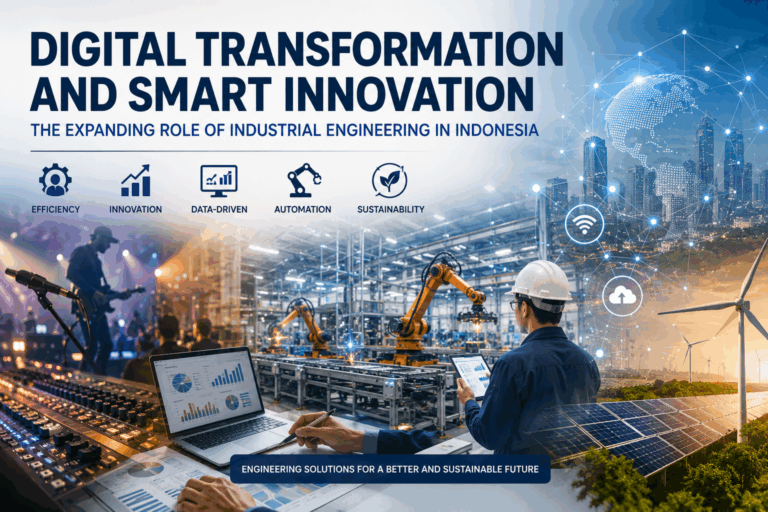
Industrial Engineering continues to evolve alongside the rapid advancement of digital technology in Indonesia. In the modern industrial era, Industrial Engineering is no longer limited to manufacturing process optimization but has expanded into creative industries, digital business systems, automation, and smart manufacturing technologies. The integration of technology, efficiency, and innovation has made Industrial Engineering increasingly relevant in supporting national industrial transformation and competitiveness.
One example of this development can be observed in the Indonesian music industry. The application of Industrial Engineering principles in the music sector contributes to production planning, logistics coordination, event management, workflow efficiency, and digital distribution systems. The increasing use of digital platforms and data-driven management systems has encouraged the music industry to adopt more structured and efficient operational processes. This phenomenon demonstrates that Industrial Engineering has become interdisciplinary and capable of adapting to industries beyond conventional manufacturing.
In addition to the creative sector, digital transformation has also become a major focus in Indonesia’s manufacturing industry. The food and beverage industry, for instance, has begun implementing data-driven systems to improve operational efficiency and strengthen industrial competitiveness. Garudafood emphasized the importance of digital transformation through data analytics and integrated operational systems to support decision-making processes, optimize supply chain management, and improve production performance. Through digitalization, companies can respond more quickly to market demand changes, improve inventory management, and enhance product quality control. This transformation reflects the increasing importance of technology integration in industrial operations.
The development of smart factory systems also represents a significant milestone in Indonesia’s industrial transformation. Schneider Electric has demonstrated its commitment to supporting industrial resilience and national transformation through the expansion of smart factory technology in Indonesia. Smart factories integrate automation systems, Internet of Things (IoT), real-time monitoring, and digital control technologies to improve production efficiency and operational sustainability. The implementation of smart factory systems enables industries to reduce operational waste, increase energy efficiency, and improve manufacturing flexibility. Such developments align with the broader implementation of Industry 4.0 and the transition toward Industry 5.0, where technology and human collaboration become central to industrial innovation.
From an Industrial Engineering perspective, these transformations require multidisciplinary competencies involving production management, quality control, supply chain optimization, ergonomics, and digital system integration. Industrial engineers are expected to possess analytical capabilities and technological adaptability to manage increasingly complex industrial systems. The growing adoption of automation, artificial intelligence, and digital manufacturing systems also creates broader career opportunities for Industrial Engineering graduates in manufacturing industries, digital businesses, creative sectors, and smart technology development.
Despite these opportunities, Indonesia still faces several challenges in accelerating industrial transformation. Technological infrastructure gaps, unequal digital adoption among industries, cybersecurity concerns, and limited highly skilled human resources remain important issues that need to be addressed. Therefore, collaboration among government institutions, universities, and industries is necessary to strengthen research, innovation, and workforce development programs that support sustainable industrial growth.
In conclusion, digital transformation and smart factory innovation have significantly expanded the role of Industrial Engineering in Indonesia. The integration of digital technology into creative industries, manufacturing systems, and smart factories demonstrates how Industrial Engineering contributes to improving industrial efficiency, sustainability, and competitiveness. By strengthening technological innovation and human resource capabilities, Indonesia has the potential to build a more adaptive, resilient, and globally competitive industrial ecosystem in the future.
Reference:
- Depok Pos. (2026, January). Perkembangan teknik industri di dunia musik Indonesia. Depok Pos
- Investing.com Indonesia. (2025, September 29). Perkuat industri makanan dan minuman, Garudafood dorong transformasi digital data-driven. Investing.com Indonesia\
- Industry.co.id. (2025, June 24). Ekspansi smart factory, komitmen kuat Schneider Electric dukung agenda transformasi dan ketahanan industri nasional. Industry.co.id

Comments :