


Generative AI and Digital Twins: The New Direction of Industrial Engineering in 2026
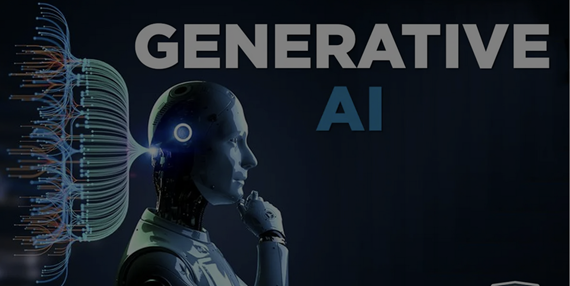
(Source: Generative Artificial Intelligence)
Industrial engineering is undergoing a major transformation driven by the integration of Generative Artificial Intelligence (GenAI), digital twins, and Industry 5.0 technologies. Companies are no longer focusing only on automation and productivity, but also on resilience, sustainability, and human-centered operations. The rapid evolution of smart manufacturing systems has changed how industries manage production, logistics, maintenance, and decision-making processes.
One of the most significant trends in industrial engineering is the adoption of Generative AI in supply chain management. Traditional supply chains often rely on historical data and reactive planning, making them vulnerable to disruptions and inefficiencies. Recent studies show that GenAI enables predictive analytics, autonomous decision-making, and intelligent scenario simulation to improve operational performance. Researchers have highlighted that GenAI can identify bottlenecks, optimize logistics, and support adaptive production systems in real time.
Another important development is the emergence of digital twin technology. A digital twin is a virtual representation of a physical system that continuously receives data from sensors and industrial equipment. In industrial engineering, digital twins are widely used for predictive maintenance, process optimization, and operational monitoring. Through real-time simulation, engineers can predict machine failures before they occur, reducing downtime and maintenance costs. Recent research emphasizes that AI-enabled digital twins are becoming essential components of smart factories and autonomous manufacturing systems.
The transition from Industry 4.0 to Industry 5.0 also introduces a stronger focus on sustainability and human collaboration. Unlike Industry 4.0, which primarily emphasized automation and connectivity, Industry 5.0 promotes collaboration between humans and intelligent systems. Generative AI is now being integrated into sustainable supply chain management to support circular economy practices, eco-friendly product design, and energy-efficient manufacturing operations. Researchers propose that AI-driven systems can improve environmental performance while maintaining productivity and operational flexibility.
In manufacturing industries, companies are increasingly implementing AI-powered smart factories. Modern factories now use robotics, autonomous inspection systems, Industrial Internet of Things (IIoT), and AI-driven analytics to optimize production activities. Hyundai, for example, has developed a manufacturing plant that combines robotics, drones, and digital twins to improve operational efficiency and quality control. These technologies enable real-time monitoring and rapid response to production disruptions.
Generative AI is also transforming engineering design processes. AI-based engineering copilots can rapidly generate and evaluate multiple design alternatives, reducing development time significantly. Instead of relying entirely on manual engineering analysis, companies now use AI to explore design possibilities, evaluate trade-offs, and support innovation. This transformation allows engineers to focus more on strategic problem-solving and creativity rather than repetitive technical tasks.
Despite these advantages, several challenges remain. The implementation of AI and digital twin systems requires high investment costs, strong cybersecurity infrastructure, and skilled human resources. Many organizations also face difficulties integrating AI technologies into existing enterprise systems. Furthermore, ethical concerns regarding data privacy, transparency, and human control over autonomous systems continue to be discussed in academic and industrial communities.
Overall, the future of industrial engineering is closely connected with the advancement of AI, digital twins, and sustainable manufacturing systems. Industrial engineers are expected to develop interdisciplinary skills that combine engineering knowledge, data analytics, artificial intelligence, and sustainability management. As industries continue moving toward autonomous and intelligent operations, industrial engineering will play a critical role in designing efficient, resilient, and human-centered industrial systems.
References:
- Manne, V. N. (2025). Reducing Supply Chain Bottlenecks Using Generative AI and Industry 4.0 Technologies. Journal of Information Systems Engineering and Management.
- Lin, K.-Y. (2025). Generative Artificial Intelligence–Driven Sustainable Supply Chain Management under Industry 5.0. International Journal of Logistics Research and Applications.
- Necula, S.-C., & Rieder, E. (2025). Generative and Adaptive AI for Sustainable Supply Chain Design. MDPI Journal of Theoretical and Applied Electronic Commerce Research.
- Zheng, G., & Brintrup, A. (2025). Enhancing Supply Chain Visibility with Generative AI. International Journal of Production Research.
- Reuters. (2026). AI Helping India’s Engineering Hubs Generate IP Faster.
- Business Insider. (2025). Hyundai Built Its Newest Factory Around AI-Powered Technology.
- Barron’s. (2026). GE Aerospace Taps Generative AI to Design a Hypersonic Engine.
- Ismail, L., et al. (2025). A Systematic Review of Digital Twin-Driven Predictive Maintenance in Industrial Engineering. arXiv.
- Jiao, J., et al. (2025). Generative AI and LLMs in Industry. arXiv.
- TechRadar. (2026). The New Engineering Playbook: How AI Design Copilots Are Reshaping Product Development.

Comments :