


From Industry 4.0 to Industry 5.0: The Future of Industrial Engineering
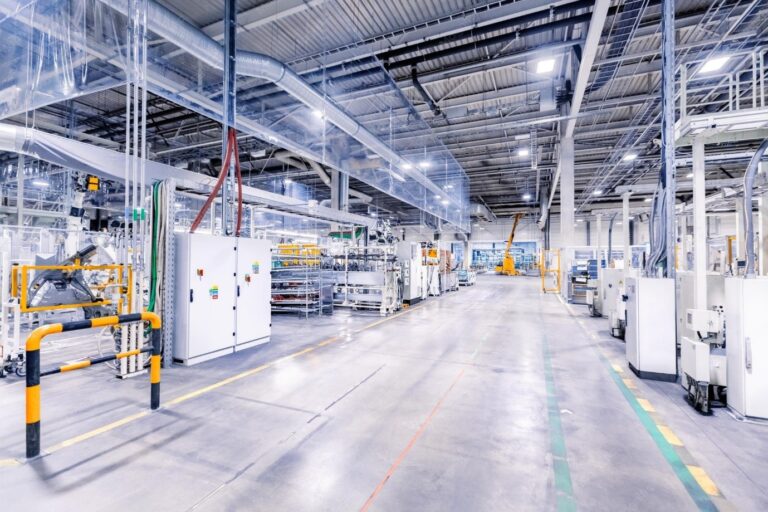
(Source: magnific.com)
The industrial sector is continuously changing as new technologies transform the way companies operate. Industry 4.0 introduced technologies such as Artificial Intelligence (AI), the Internet of Things (IoT), robotics, big data, and digital twins to improve automation and efficiency. However, as technology becomes more advanced, industries are moving toward a new concept known as Industry 5.0, which focuses not only on technology but also on human involvement, sustainability, and resilience.
This transition has important implications for Industrial Engineering. Traditionally, Industrial Engineers focus on improving productivity, efficiency, quality, and cost through process optimization and effective resource management. In the Industry 5.0 era, these objectives need to be balanced with human well-being, environmental sustainability, and the ability of organizations to respond to disruptions. Therefore, the role of Industrial Engineers is becoming broader than simply improving operational efficiency.
AI can support Industrial Engineers by processing large amounts of data and providing insights for decision-making. For example, AI can be used to analyze production data, predict machine failures, optimize production schedules, and improve supply chain operations. These capabilities can help companies respond more quickly to changes while reducing waste and improving resource utilization.
However, Industry 5.0 does not mean that humans become less important. Instead, it emphasizes human-machine collaboration. AI and automation can perform repetitive and data-intensive tasks, while Industrial Engineers can focus on interpreting results, solving complex problems, defining system requirements, and making decisions based on actual operational conditions. This creates an opportunity for Industrial Engineers to act as a bridge between advanced technology, workers, and organizational objectives.
The transition also changes the skills required from future Industrial Engineers. In addition to traditional knowledge such as operations research, production planning, quality management, and ergonomics, Industrial Engineers will need digital competencies in AI, data analytics, automation, simulation, and digital systems. At the same time, communication, critical thinking, adaptability, and problem-solving will remain important because industrial systems involve both technology and people.
Sustainability is another important aspect of the future of Industrial Engineering. Companies are increasingly expected to reduce energy consumption, material waste, and environmental impact. Industrial Engineers can contribute by optimizing processes, improving resource utilization, designing sustainable supply chains, and evaluating whether new technologies provide meaningful environmental and operational benefits.
Ultimately, Industry 5.0 represents an opportunity for Industrial Engineering to become even more relevant in the future. The Industrial Engineer of tomorrow will not only ask how to make a process faster or cheaper, but also how to make it smarter, more sustainable, resilient, and human-centered. By combining engineering knowledge with AI, data analytics, and human-centered thinking, Industrial Engineers can play an important role in shaping the industries of the future.
Reference:
- Preparing students for Industry 5.0: Evaluating the Industrial Engineering and Management education. (2025). Procedia Computer Science, 253, 2219–2228. Preparing Students for Industry 5.0: Evaluating the Industrial Engineering and Management Education – ScienceDirect
- Towards 5.0 skills acquisition for students in industrial engineering: The role of learning factories. (2024). Procedia Computer Science, 232, 317–326. https://doi.org/10.1016/j.procs.2024.01.031Towards 5.0 skills acquisition for students in industrial engineering: the role of learning factories – ScienceDirect

Comments :