



Supply Chain Ressilience in an Age of Tarrifs and Geopolitical Tension: Distruptions, Strategic, Responses, and Implications for Indonesian Industry
(Source: AI Generated)
Supply chains around the world have traditionally been designed to maximize efficiency, with production located in places that provide low-cost positioning and inventory levels kept to a minimum. This ideology is being tested, however, by changing trade policies and ongoing conflicts between nations. The Thomson Reuters Institute believes that tariffs have gone from being a purchasing risk to a systemic risk that threatens to derail the flow of supplies and lead to issues with customs and operations. The numbers, according to survey data, reveal the seriousness of the threat. The 2026 Thomson Reuters Global Trade Report shows supply chain management as the top concern of 68% of those working in global trade, up significantly from 35% the year before. The implications for the professional industrial engineer are that the supply chain design is a risk issue and no longer a logistics problem.
At least one other tangible source of economic and financial penalties are tariffs. According to the Chartered Institute of Logistics and Transport UK, the conflict between the US, Israel and Iran in early 2026 effectively shut down the Strait of Hormuz which takes out 20% of the world’s shipping-moved oil. The same source also indicates that the shutdown had ripple effects in shipping and air cargo, proving the point that the loss of a single pont can send prices and shipments through the roof across several industries at once. For the manufacturer, the higher fuel prices, rerouted shipping and longer lead times translate directly into production planning problems for production schedules, ranging from supplier shortages to chaotic and unpredictable delivery times.
The current environment creates considerable difficulties due to the confluence of various risks that are likely to have a long-term impact on supply chains. The Thomson Reuters Institute reports that even short-term policy changes can cause long-term disruption of supply chain authenticity due to sunk costs or regional advantages that are developing. Firms, therefore, cannot expect the situation to return to normal by waiting for conditions to normalize. The literature of the problem points to diversification as the main course of action. A 2025 paper in the Journal of Supply Chain Management Systems, citing recent literature, reports that firms with geographically diversified sourcing portfolios are less susceptible to geopolitical shocks and production disruption and can therefore continue operation. In other words, access to resilience does not come from relocating a firm to some new country or transportation route, but from deconcentrating so as not to be dependent on any single country or route.
For Indonesia, these implications had placed that country in both the threat and the opportunity. The experts quoted in the Suara Surabaya predicted that the uncertainty caused by the tariffs may have posed a threat to manufacturing investment, especially in labor-intensive industries such as textiles, footwear, and furniture, which were most likely to be affected. The impacts of such the uncertainty may have had an even broader reach into micro, small, and medium-sized businesses that were involved in the supply chains within the target industries. On the other hand, the changing supply chain landscape had likely played in favor of Southeast Asia. A paper featured in the Journal of Supply Chain Management Systems had argued that the manufacturing industry in Indonesia and the huge domestic market had had the advantages of making Indonesia a more attractive place for supply chain diversification. Indonesia was potentially best prepared to seize this advantage, depending on how well it had been able to manage the uncertainty and remained competitive.
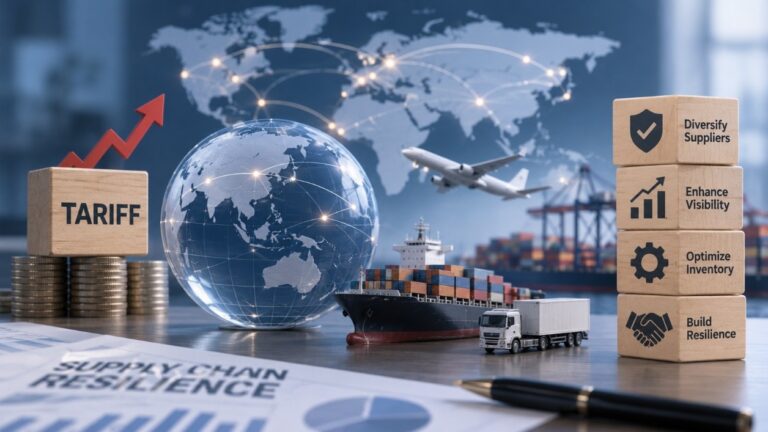
At the end of the day, resilience in the supply chain has to be planned for – not hoped for. Supply chain risk professionals are advising that the best starting point for a resilient supply chain is diversification of suppliers, supported by increased transparency into multi-tier suppliers. According to the Thomson Reuters survey, the most prevalent technology is the use of data analytics in supply chain (58%), followed by 48% reporting the automation of Enterprise Resource Planning (ERP) systems and supply chain visibility systems, such as risk assessment, inventory and safety stock planning, network design, and scenario analysis. The take away message from this research is that supply chain efficiency must be balanced with resilience; a lean, cost efficient supply chain is inherently vulnerable to shocks, however small. Firms that can strike a balance through supplier diversification, single source monitoring via data analytics, and adaptable network design, will be more resilient when facing future disruptions, with industrial engineers leading the charge.
References:
- Berkovitch, D. (2026, February 12). The 2026 supply chain challenge: Global trade disruption. Retrieved from Tax & Accounting Blog Posts by Thomson Reuters: https://tax.thomsonreuters.com/blog/2026s-supply-chain-challenge-confronting-complexity-and-disruption-in-global-trade-tri/
- Butler, R. (2026, April 23). Tariffs are stress-testing manufacturers’ supply chains. Retrieved from Thomson Reuters Corporation: https://www.thomsonreuters.com/en/institute/articles/tariffs-stressing-manufacturers-supply-chains
- Hecker, C. (2025). Geopolitical risk in global supply chains: The case of southeast asia. Journal of Supply Chain Management Systems, 1-6.
- Syafaruddin, M. (2026, July 27). Tarif baru AS dinilai berpotensi menahan ekspansi industri manufaktur indonesia. Retrieved from Suara Surabaya: https://www.suarasurabaya.net/ekonomibisnis/2026/tarif-baru-as-dinilai-berpotensi-menahan-ekspansi-industri-manufaktur-indonesia/?page=all
- UK, C. I. (2026, March 3). Hormuz closure triggers global supply chain shock as oil, shipping and air cargo disrupted. Retrieved from CILT: https://ciltuk.org.uk/news/hormuz-closure-triggers-global-supply-chain-shock-as-oil-shipping-and-air-cargo-disrupted/
Comments :